
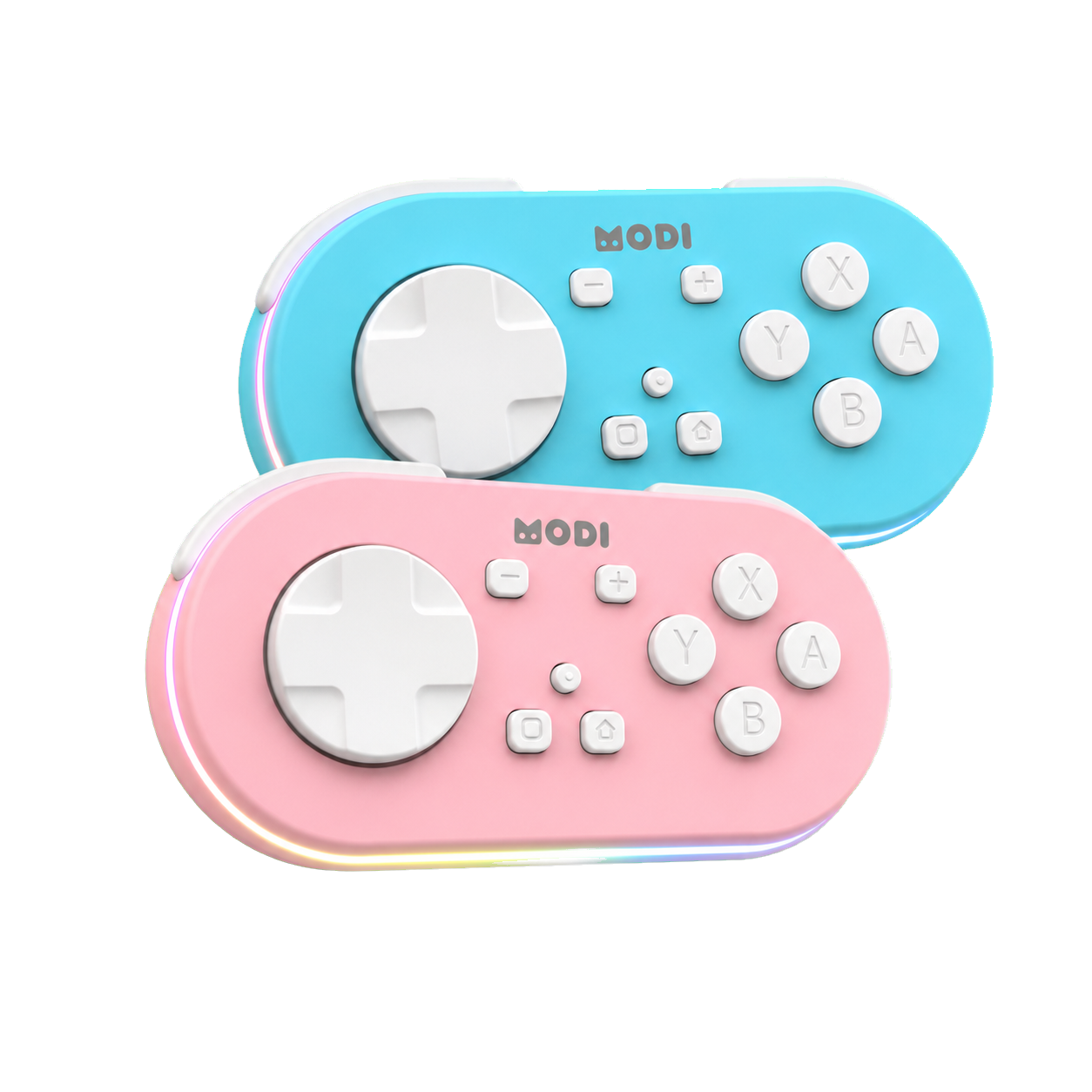
To set up a MODI Anki remote on iPad, pair the remote in Switch Mode through iPad Bluetooth settings, then assign its buttons inside AnkiMobile under Settings, Review, and Gamepads. Switch Mode is the standard MODI mobile setup because it exposes gamepad-style inputs that AnkiMobile can configure when iOS recognizes the controller profile. MODI is an independent Bluetooth accessory, not an official AnkiMobile or Apple product, so the remote pairing and app button assignments are separate steps.
To set up a MODI Anki remote on iPad, pair the remote in Switch Mode through iPad Bluetooth settings, then assign its buttons inside AnkiMobile under Settings, Review, and Gamepads. Switch Mode is the standard MODI mobile setup because it exposes gamepad-style inputs that AnkiMobile can configure when iOS recognizes the controller profile. MODI is an independent Bluetooth accessory, not an official AnkiMobile or Apple product, so the remote pairing and app button assignments are separate steps.
Before starting, charge the remote enough for setup, open iPad Bluetooth settings, and keep AnkiMobile ready for the second half of the process. The public MODI setup hub is the right place for the broader walkthrough if you need platform-specific details beyond this iPad article: complete MODI setup tutorial. For this guide, the goal is narrower: connect MODI to the iPad, map useful review actions in AnkiMobile, and confirm the orientation before relying on it during a review session.
Mode
Use Switch Mode for the iPad setup rather than Keyboard Mode. Keyboard Mode is intended for desktop use on macOS, Windows, and Linux with preset keybindings. AnkiMobile on iPad uses its own gamepad configuration, so Switch Mode is the documented MODI choice for mobile review workflows. This distinction matters because changing modes is not just a menu preference inside AnkiMobile. The remote presents different input behavior depending on how it was paired with the host device.
If MODI was previously paired to another computer, phone, tablet, or mode, start clean by forgetting every saved MODI or Anki remote entry in Bluetooth settings before pairing again. That same forget-and-repair process is the preferred starting point when moving the remote to the iPad. Pressing Home later wakes the remote and reconnects in the last-used mode, but a mode change should be treated as a fresh Bluetooth pairing, not a quick reconnect.
Bluetooth
On the iPad, open Settings, then Bluetooth, and leave the Bluetooth screen visible while you put the remote into Switch Mode. Hold Y and Home together for one second, then look for the MODI connection in the available Bluetooth devices list. Select it when it appears. After a successful Switch Mode connection, the center LED becomes solid blue. That blue center LED is the MODI-side confirmation that the remote connected in the intended mobile mode.
If the remote does not appear, pause and check the basics before changing AnkiMobile settings. Make sure the remote is awake, close enough to the iPad, and not still connected to another saved device. If it connects but remains unresponsive after a fresh pairing, restart the iPad and try again. Bluetooth state, old pairings, battery state, and host-device behavior can all affect setup, so avoid assuming the app configuration is the only possible cause.
Gamepads
Once the iPad shows the remote as connected, open AnkiMobile and configure the review controls inside the app. The path is Settings, then Review, then Gamepads. AnkiMobile provides configurable gamepad actions when iOS recognizes the controller profile, and this menu is where you decide what each recognized input should do during review. MODI supplies the controller input; AnkiMobile decides how those inputs map to study-screen actions on the iPad.
Assign only the actions you actually want to use in review, such as revealing an answer, choosing an answer button, replaying audio, or undoing an action when available in AnkiMobile’s own action list. Do not expect the iPad to inherit desktop Anki keyboard defaults, because this is not the same workflow. MODI’s Switch Mode defaults can include review-oriented inputs, but the AnkiMobile Gamepads screen is the authoritative place to confirm what each button will do.
Orientation
Hold MODI in the recommended vertical orientation with the D-pad facing down before you test the button assignments. This orientation is part of the intended handling pattern for review sessions, and checking it early prevents accidental confusion between a pairing issue and a button-position issue. A remote can be connected correctly while still feeling wrong if it is being held differently from the layout assumed during setup, especially when assigning actions by touch.
Think of orientation as a workflow choice, not a promise about physical outcomes. The practical benefit is that you can keep common review controls under one hand and reduce reaching for the iPad screen during routine cards. It does not change AnkiMobile’s scheduling, answer evaluation, or study results. If a button feels awkward, return to the Gamepads menu and remap the control rather than assuming the Bluetooth pairing needs to be rebuilt.
Testing
After mapping the buttons, test them on a small number of cards before starting a longer review session. Confirm that the button you expect to reveal the answer does that, then verify the answer choices you assigned. Also test any secondary actions you rely on, such as replay audio or undo, if you mapped them. This test should happen inside AnkiMobile’s review screen because the Bluetooth settings page can only confirm connection, not final app behavior.
If one control behaves differently from what you expected, change the Gamepads assignment and test again. If none of the controls respond in AnkiMobile, return to Bluetooth settings and confirm that the remote is still connected with the Switch Mode pairing. If the iPad shows a connection but AnkiMobile still receives no useful input, restart the iPad after a fresh pairing and repeat the test. That gives you a clear next diagnostic step.
Power
MODI automatically sleeps after approximately 2.5 minutes without a Bluetooth connection or 5 minutes of inactivity, so a sleeping remote can look like a failed setup if you pause too long between steps. Press Home to wake it and reconnect in the last-used mode. To manually sleep or turn off the remote, hold Home for 3 seconds. If you are still configuring AnkiMobile, keep the remote awake while moving between menus and review testing.
Watch the documented LED signals during setup, but do not infer extra battery details from them. A quickly flashing red LED means low battery, charging flashes green, and the charging LED turns off when charging is complete. Decorative lighting can be turned on or off by double-clicking the Light button, and keeping those lights off when not needed helps preserve practical battery life. Once the iPad pairing, Gamepads mapping, and orientation test all work, setup is complete.
Sources and product references
This first-party MODI guide was checked against the current product manual and relevant app documentation. App menus and third-party behavior can change after publication.