
For an Anki remote on iPad, Switch Mode is the standard MODI setup because AnkiMobile lets users configure recognized gamepad inputs under Settings, Review, Gamepads. Keyboard Mode is mainly the desktop preset workflow for macOS, Windows, and Linux, where MODI sends keyboard-style controls without requiring the optional desktop add-on. On iPad, the practical question is not which mode sounds more familiar, but which input type AnkiMobile is prepared to see and map.
For an Anki remote on iPad, Switch Mode is the standard MODI setup because AnkiMobile lets users configure recognized gamepad inputs under Settings, Review, Gamepads. Keyboard Mode is mainly the desktop preset workflow for macOS, Windows, and Linux, where MODI sends keyboard-style controls without requiring the optional desktop add-on. On iPad, the practical question is not which mode sounds more familiar, but which input type AnkiMobile is prepared to see and map.
MODI is an independent Bluetooth accessory, not a product made, endorsed, or certified by Anki, AnkiMobile, Apple, or another app or device maker. Its modes describe the inputs the remote presents to the host device. AnkiMobile then decides what actions can be assigned inside the app. If you are setting up MODI specifically for iPad review, start with Switch Mode, then use AnkiMobile’s own gamepad settings to choose the review actions you want.
Switch Mode
Switch Mode is the MODI mode intended for the standard mobile setup on iPhone and iPad. To pair in that mode, open the iPad Bluetooth settings, hold Y and Home for one second, and select the MODI connection when it appears. After a successful Switch Mode connection, the center LED becomes solid blue. That blue indicator matters because it confirms the remote is using the gamepad-style profile expected by the mobile configuration path.
Once the iPad recognizes the controller profile, configuration moves into AnkiMobile rather than the Bluetooth screen. Open AnkiMobile, go to Settings, Review, Gamepads, and assign the actions you want to the available controls. MODI supplies the input; AnkiMobile supplies the action list and mapping interface. The exact mapping should match how you review, such as choosing buttons for showing an answer, grading a card, undoing an action, or replaying audio where supported.
Keyboard Inputs
Keyboard Mode is different because it presents preset keyboard-style inputs. MODI’s Keyboard Mode is intended for desktop use on macOS, Windows, and Linux with default review controls, and it does not require the MODI desktop add-on for that default workflow. Those preset inputs can be useful on computers because desktop Anki already supports common keyboard controls, including Space or Enter for reveal or Good and number keys for answer buttons when available.
On iPad, keyboard-style input is not the standard MODI setup path for AnkiMobile. That does not mean every keyboard input is meaningless on iPad, because AnkiMobile has its own keyboard-related study controls and iPadOS may recognize keyboards differently from game controllers. The distinction is that MODI’s documented iPad workflow uses Switch Mode because it exposes gamepad-style inputs that AnkiMobile can configure through its Gamepads screen, giving a clearer mapping process for review commands.
Mapping Choice
The best mapping choice is the one that keeps the buttons predictable for your review habits, without assuming a single universal layout fits every deck or user. In Switch Mode, MODI defaults include controls such as Space or Good, Easy, Again, Replay Audio, Hard, and Undo. AnkiMobile’s Gamepads settings are where you decide which physical input should trigger which available action, so treat the setup as a small control layout decision.
A useful starting point is to put the most frequent actions on the easiest buttons to identify without looking down. For many reviewers, that means separating Again, Good, and Easy clearly, then assigning Undo or Replay Audio only if those actions are part of the session. The recommended MODI orientation is vertical with the D-pad facing down. Orientation is a workflow preference here, not a promise of a medical, comfort, speed, or academic outcome.
Mode Switching
Switching between Keyboard Mode and Switch Mode is not just a toggle inside AnkiMobile. When changing from one MODI mode to another, forget every saved MODI or Anki remote entry in the iPad Bluetooth settings, then repeat the full pairing steps for the mode you want. This matters because iPadOS may remember the previous Bluetooth profile, which can leave the remote connected in a way that does not match the input style you intend.
The same forget-and-repair approach is the preferred starting point when moving the remote to a different phone, tablet, or computer. Pressing Home wakes MODI and reconnects in the last-used mode, which is helpful after normal sleep but not enough when you intentionally want a different profile. If you need the broader setup sequence, use the complete MODI setup tutorial and follow the iPad path for Switch Mode rather than mixing desktop Keyboard Mode instructions into the mobile process.
Troubleshooting
If MODI connects to the iPad but AnkiMobile does not respond, first confirm the mode. A solid blue center LED indicates Switch Mode after successful pairing; a solid green center LED indicates Keyboard Mode. If the iPad has remembered an older entry, forget the saved MODI or Anki remote entries, pair again with Y and Home for Switch Mode, then return to AnkiMobile’s Settings, Review, Gamepads screen and check the assigned actions.
If the remote still connects but remains unresponsive after a fresh pairing, restart the iPad and try again. Do not assume the remote is the only possible cause. Bluetooth state, saved pairings, battery state, app configuration, and host-device behavior can all affect the result. Low battery is indicated by a quickly flashing red LED, while charging flashes green and the charging LED turns off when charging is complete. Do not infer a battery percentage from those LED patterns.
Practical Decision
For iPad Anki review, choose Switch Mode unless you have a specific reason to test keyboard-style input outside the standard MODI mobile path. Switch Mode aligns with AnkiMobile’s configurable Gamepads area and gives you a direct place to assign actions. Keyboard Mode remains important to understand because it explains why the same remote can behave differently on desktop Anki, where preset keyboard controls are the normal default and custom desktop remapping is a separate add-on choice.
That distinction also prevents setup drift. If an instruction says Keyboard Mode, it is usually talking about a desktop workflow. If an instruction says AnkiMobile on iPad, it should point you toward Switch Mode and AnkiMobile’s gamepad settings. MODI provides the Bluetooth input profile, while AnkiMobile controls what recognized inputs do during study. Keeping those responsibilities separate makes mode choice, pairing cleanup, and button mapping easier to reason through when something does not respond.
See the remote and current buying options
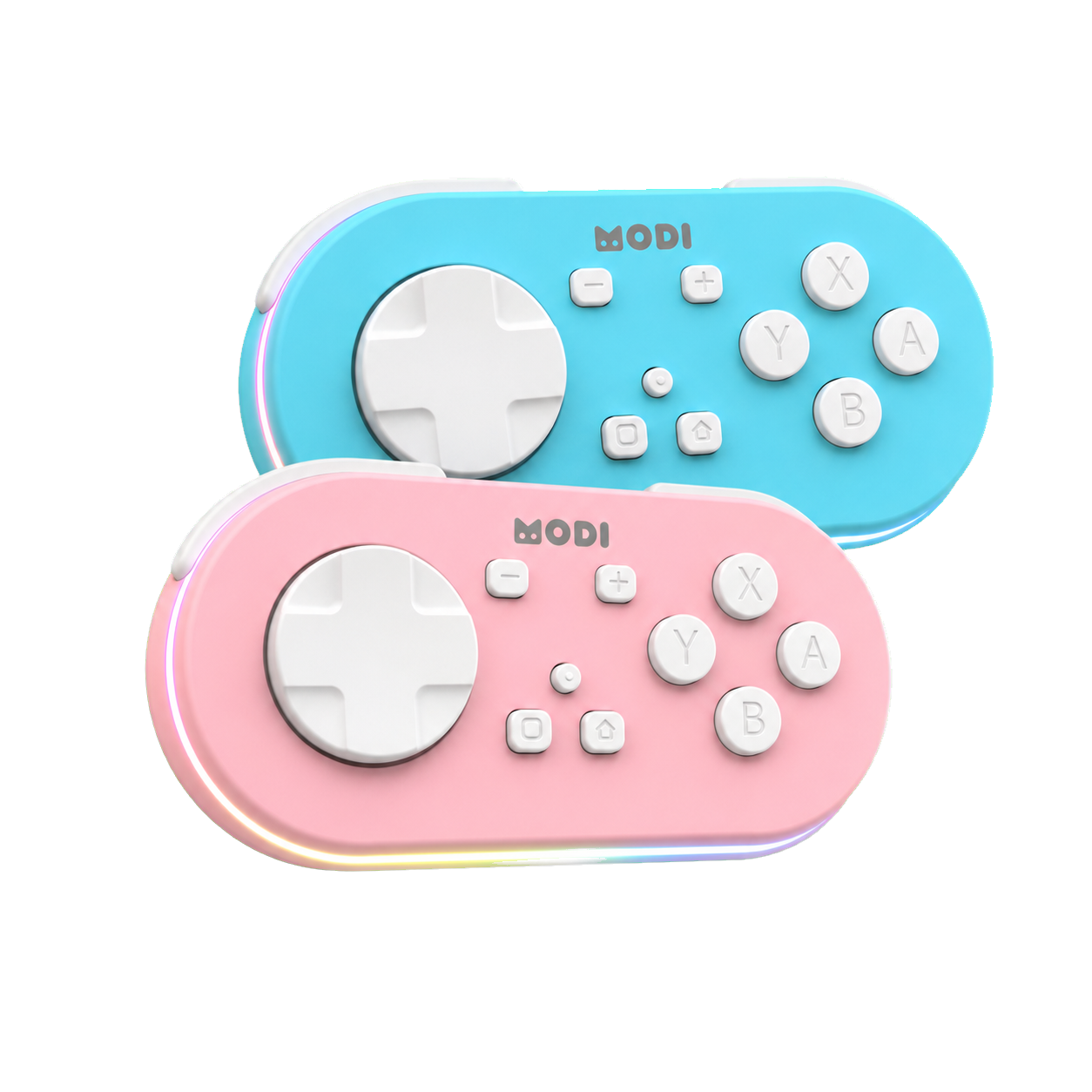
Review the blue and pink MODI remotes, then open the appropriate Amazon listing when you are ready.
Sources and product references
This first-party MODI guide was checked against the current product manual and relevant app documentation. App menus and third-party behavior can change after publication.