
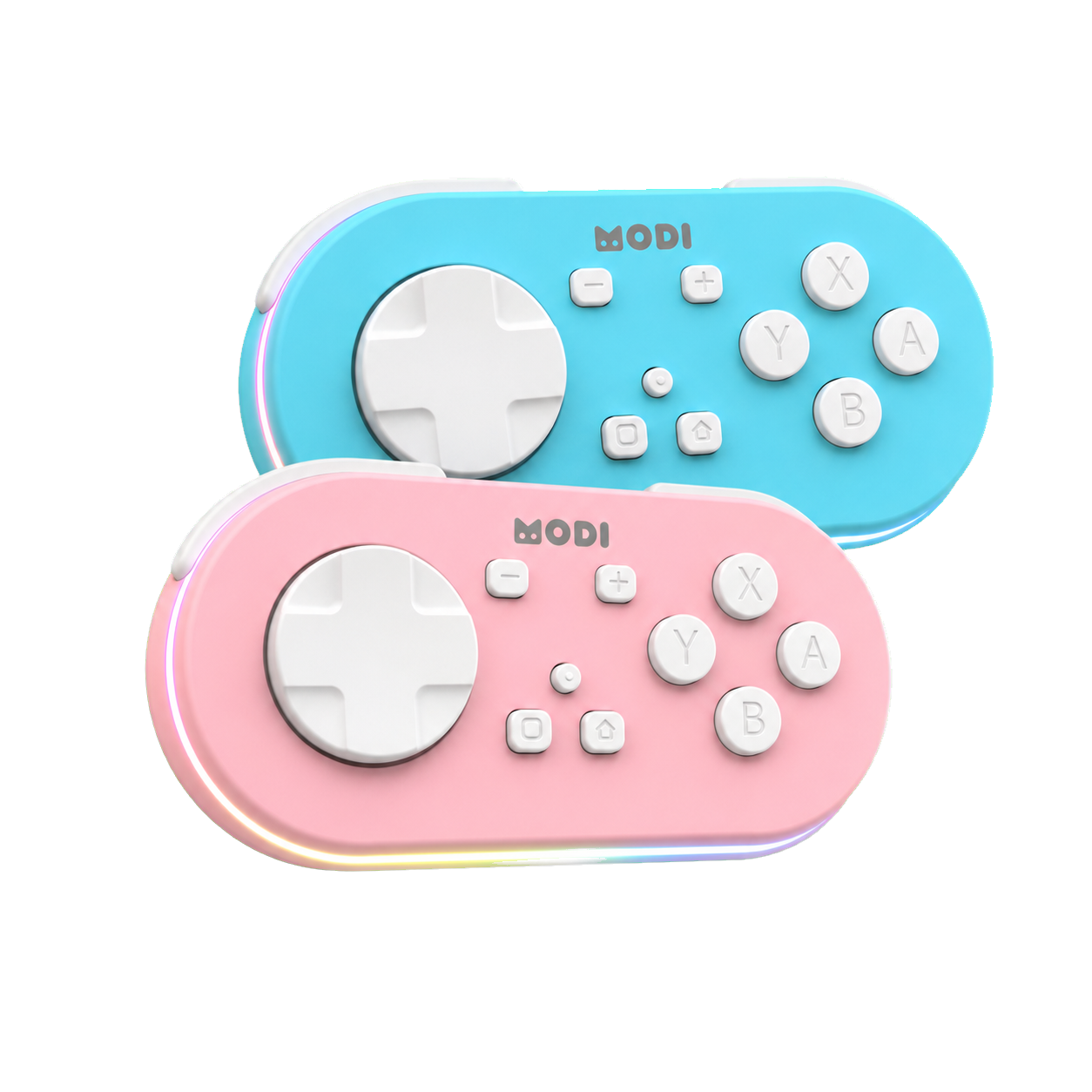
If a MODI Anki remote lags, repeats an answer, or seems to press twice, do not assume one cause. Work through battery state, Bluetooth pairing history, nearby signal noise, app focus, and a repeatable test. MODI is an independent Bluetooth accessory for Anki workflows, not an official Anki product, so the useful question is where the input delay or duplication enters: the remote, the host device, the app, or a saved configuration.
If a MODI Anki remote lags, repeats an answer, or seems to press twice, do not assume one cause. Work through battery state, Bluetooth pairing history, nearby signal noise, app focus, and a repeatable test. MODI is an independent Bluetooth accessory for Anki workflows, not an official Anki product, so the useful question is where the input delay or duplication enters: the remote, the host device, the app, or a saved configuration.
This checklist is intentionally practical. It separates documented MODI behavior from choices made inside desktop Anki, AnkiMobile, AnkiDroid, or another app. Start with the simplest state checks before changing keybinds or reinstalling anything. If you recently changed mode, moved the remote to a new device, or paired it more than once, use the complete MODI setup tutorial as your baseline, then return here to isolate lag or double inputs.
Check Battery State
A weak or unstable battery can make any Bluetooth troubleshooting harder, even when it is not the only cause. MODI uses a 3.7 V, 330 mAh battery and is rated for approximately 15 hours of continuous use under the manual’s stated conditions. Treat that as a reference point, not a promise. If the low-battery LED is flashing red quickly, charge the remote before judging whether lag or duplicated inputs are still present.
While charging, the LED flashes green, and the charging LED turns off when charging is complete. Do not infer an exact battery percentage from other light behavior, because the manual does not define one. Decorative remote lighting also affects practical battery life, so double-click the Light button to turn decorative lighting off when it is not needed. After charging, test the same button sequence again before changing Bluetooth or app settings.
Reset Bluetooth State
Bluetooth state is often the fastest place to find inconsistency. MODI uses Bluetooth 2.1 and can reconnect in the last-used mode when you press Home. If the host device is holding onto an old session, a stale pairing, or the wrong input profile, the remote may appear connected while the app receives delayed, doubled, or unexpected commands. Open the Bluetooth settings on the computer, phone, or tablet and confirm what is actually connected.
If you are switching between Keyboard Mode and Switch Mode, forget every saved MODI or Anki remote entry in Bluetooth settings before pairing again. Use Keyboard Mode for the default desktop workflow, and use Switch Mode when you want gamepad-style input for mobile or the desktop add-on. When a fresh pairing connects but remains unresponsive, restart the host device and try again. That restart tests the host Bluetooth stack, not just the remote.
Remove Duplicate Pairings
Duplicate Bluetooth entries can make troubleshooting look random. A device may show more than one saved MODI, controller, or Anki remote entry after testing different modes or moving between devices. Those entries can represent different profiles, not harmless copies. If the remote sometimes works, then double inputs or lags after reconnecting, remove all saved entries that could belong to the remote before doing any more app-level remapping.
After forgetting the entries, pair only one mode for the test you are running. For desktop Keyboard Mode, hold A + Home for one second, then select the MODI connection and check for a solid green center LED. For Switch Mode, hold Y + Home for one second and check for a solid blue center LED. Avoid alternating modes during the diagnostic pass, because that makes duplicate-entry behavior harder to identify.
Limit Interference Variables
Bluetooth interference is real, but it is easy to overstate without evidence. Do not assume a specific distance, material, or device count is the cause unless your own test proves it. Instead, reduce variables for one short session: keep the host device awake, keep the remote charged, remove unnecessary nearby Bluetooth devices if practical, and avoid testing through multiple rooms or with the computer under heavy peripheral switching.
The point is not to create a perfect environment forever. The point is to see whether input timing becomes predictable when fewer wireless and system-state variables are present. If lag disappears only in that simplified setup, add devices or conditions back one at a time. If lag remains in the simplified setup, continue to app focus, keybinds, and repeatability rather than blaming interference by default.
Verify App Focus
A remote sends inputs; the active app decides what to do with them. On desktop Anki in Keyboard Mode, the default workflow uses preset keyboard inputs, and no MODI add-on is required. Desktop Anki also has its own keyboard behavior, including Space or Enter to reveal an answer or choose Good, and number keys for answer buttons when available. If another window has focus, those commands may go elsewhere or appear delayed.
On mobile, Switch Mode is the standard MODI setup for AnkiMobile and AnkiDroid because it exposes gamepad-style inputs. AnkiMobile has configurable gamepad actions when iOS recognizes the controller profile. In AnkiDroid, X-Y-B-A inputs can appear visually as Y-X-A-B in the keybind menu because of a third-party display mapping issue. That label mismatch does not by itself prove doubled input; assigned commands can still function normally.
Run A Repeatable Test
Use a repeatable test before deciding that the remote, Anki, or the host device is at fault. Pick one device, one mode, one app, and one button. Start from a fresh pairing with duplicate entries removed. In a review screen, press the same button ten times slowly, waiting for the app to finish responding each time. Record whether the problem is delay, two actions from one press, or the wrong action.
Then change only one variable. Try the same button in another app that accepts the current input type, or try another MODI button assigned to the same Anki action. If the issue follows one physical button, that is different from an issue that follows one app action or one host device. If the remote connects but stays unresponsive after fresh pairing, restart the host device and repeat the same test.
Decide The Next Step
When the test is repeatable, the next step becomes clearer. Battery warnings point to charging first. Duplicate Bluetooth entries point to forgetting and repairing. A problem only inside one app points to that app’s focus, controls, or keybind configuration. A problem that appears after changing modes points to pairing state. A problem that appears across apps and devices after charging and fresh pairing is stronger evidence that the remote itself needs attention.
Keep the scope narrow when you contact support or continue troubleshooting. Share the device type, operating system, mode used, LED color after connection, app tested, and the exact button sequence that reproduces lag or double inputs. Avoid opening the remote, attempting battery repair, bypassing charging protections, or modifying firmware. MODI is an accessory in a larger Bluetooth and app workflow, so good diagnostics describe the whole path from press to action.
Sources and product references
This first-party MODI guide was checked against the current product manual and relevant app documentation. App menus and third-party behavior can change after publication.