
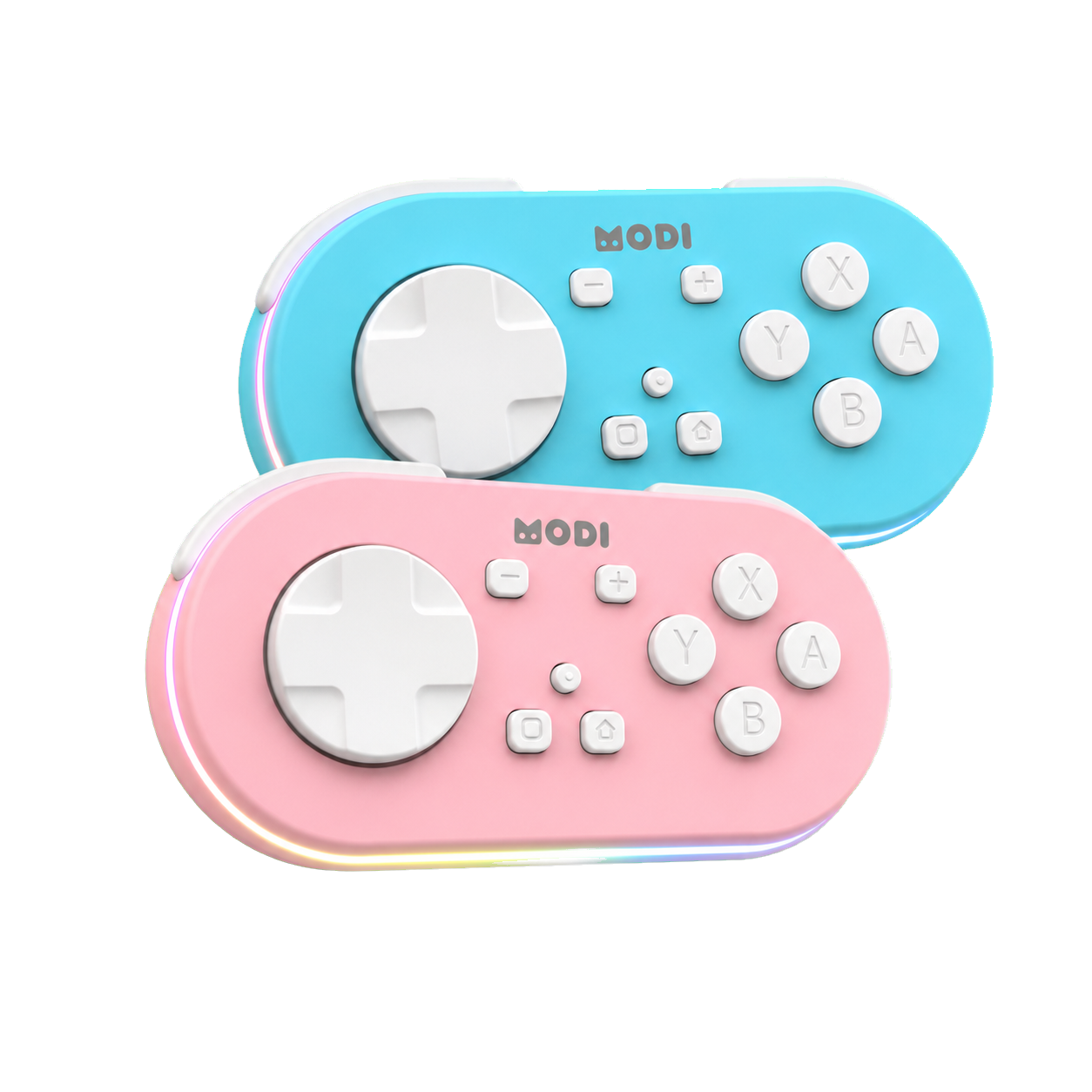
Keyboard Mode lets MODI send keyboard-style inputs that can work in Anki and may also work in presentation software when that software accepts the same keys. The practical answer is to test the specific app, because MODI can provide direction keys and Spacebar-style input, but each program decides what those inputs do. MODI is an independent Bluetooth accessory, not an official Anki product, presentation remote, or certified controller for any third-party platform.
Keyboard Mode lets MODI send keyboard-style inputs that can work in Anki and may also work in presentation software when that software accepts the same keys. The practical answer is to test the specific app, because MODI can provide direction keys and Spacebar-style input, but each program decides what those inputs do. MODI is an independent Bluetooth accessory, not an official Anki product, presentation remote, or certified controller for any third-party platform.
For desktop Anki, Keyboard Mode is the direct path for preset review controls without installing the optional MODI add-on. For other apps, including slide tools, the same mode should be treated as a compatibility test rather than an assumed feature list. If a program responds to keyboard navigation, MODI may be useful there; if the program ignores those keys or uses different shortcuts, the next step is checking that app’s keyboard settings. Start with the complete MODI setup tutorial.
Scope
Keyboard Mode is intended for macOS, Windows, and Linux desktop use with preset keybindings. In that mode, MODI behaves around keyboard inputs rather than gamepad-style controls. That matters because many desktop programs already listen for common keys, but they do not all listen in the same way. Anki has its own documented keyboard review behavior, while a presentation app, browser tab, or study website may interpret identical inputs differently, depending on focus and settings.
This distinction keeps expectations realistic. MODI supplies the input; the active application chooses the action. A right-arrow press may advance a slide in one program, move a cursor in another, or do nothing if the window is not focused. Spacebar-style input may reveal or answer in Anki, but it may start playback, scroll a page, or activate a selected control elsewhere. Compatibility should be confirmed inside the exact software and document type you plan to use.
Pairing
To use Keyboard Mode, open the computer’s Bluetooth settings, hold A + Home for one second, and select the MODI connection when it appears. A successful Keyboard Mode connection is indicated by a solid green center LED. Those steps describe the remote’s mode and Bluetooth pairing behavior only. They do not guarantee that every application on the computer will accept or map the resulting keyboard-style commands in a useful way.
If you previously paired MODI in another mode, begin by forgetting saved MODI or Anki remote entries in Bluetooth settings, then repeat the Keyboard Mode pairing steps. Saved Bluetooth profiles can leave the computer reconnecting in an unintended state. Pressing Home wakes the remote and reconnects in the last-used mode, which is convenient after setup but confusing during troubleshooting if old pairings remain. A clean pairing gives you a clearer compatibility test.
Anki
In desktop Anki, Keyboard Mode includes preset inputs for common review actions such as Again, Hard, Good or Next, Easy, Undo, Suspend, Escape, Spacebar, and direction-key navigation. Desktop Anki also supports common keyboard controls, including Space or Enter to reveal an answer or choose Good, and 1-4 for answer buttons when those buttons are available. That overlap is why Keyboard Mode can be used without the MODI add-on for the default desktop workflow.
The optional MODI desktop add-on is for users who want custom remapping through Anki, not a requirement for default Keyboard Mode. This is an important boundary when comparing Anki review use with presentation control. Anki’s response is based on Anki’s own keyboard shortcuts and MODI’s preset inputs. A slide app may share a few familiar keys, but it is a separate program with separate shortcut rules, focus behavior, and possible presentation-mode requirements.
Slides
Presentation software often uses simple keyboard navigation, which is why Keyboard Mode is worth testing for slide control. Direction keys may move between slides in many presentation views, and a Spacebar-style input may advance content in some contexts. Treat those as app-specific possibilities, not universal MODI promises. The result can change depending on whether the slideshow is active, a text box is selected, a browser frame has focus, or the deck is embedded elsewhere.
A practical test is simple. Pair MODI in Keyboard Mode, open the deck, start the exact presentation view you intend to use, and try the direction keys and Spacebar-style control before relying on it. Then click outside editable text areas and test again. If inputs only work after selecting the slide canvas or slideshow window, that is an application focus issue. If they never work, review the software’s shortcut documentation or settings.
Websites
The same logic applies to browser-based study sites and web presentation tools. MODI is not a universal website controller; Keyboard Mode can only help when the page or web app accepts the remote’s current keyboard inputs. For example, a desktop-browser Quizlet workflow may use basic direction-key and Spacebar-style controls, but that does not prove that every browser, flashcard page, slideshow service, or embedded player will respond identically. The website’s own input handling remains decisive.
Browser focus can be the hidden variable. A key may be captured by the page, the browser, an address bar, a video player, or an embedded frame. Before judging the remote, click the intended control area, leave text-entry fields, and test the same direction and Spacebar-style inputs from the computer keyboard. If the physical keyboard does not produce the desired action, MODI in Keyboard Mode usually will not create that action by itself.
Troubleshooting
When MODI connects but a target app does not respond, separate Bluetooth status from application compatibility. First confirm the remote is in Keyboard Mode by checking for the solid green center LED after connection. Next, test the same action in desktop Anki or another place that accepts standard keyboard input. If those inputs work somewhere else, the remote is connected, and the remaining question is how the presentation tool or website maps keyboard commands.
If the remote remains unresponsive after a fresh pairing, restart the host device and try again. If you are moving MODI between computers or changing modes, forget saved entries and repair before testing. Avoid interpreting decorative lighting or unrelated LED behavior as a compatibility signal; the manual defines only specific battery and charging patterns. For presentation use, the reliable decision point is whether the active software responds to direction keys and Spacebar-style input in the selected view.
Sources and product references
This first-party MODI guide was checked against the current product manual and relevant app documentation. App menus and third-party behavior can change after publication.