
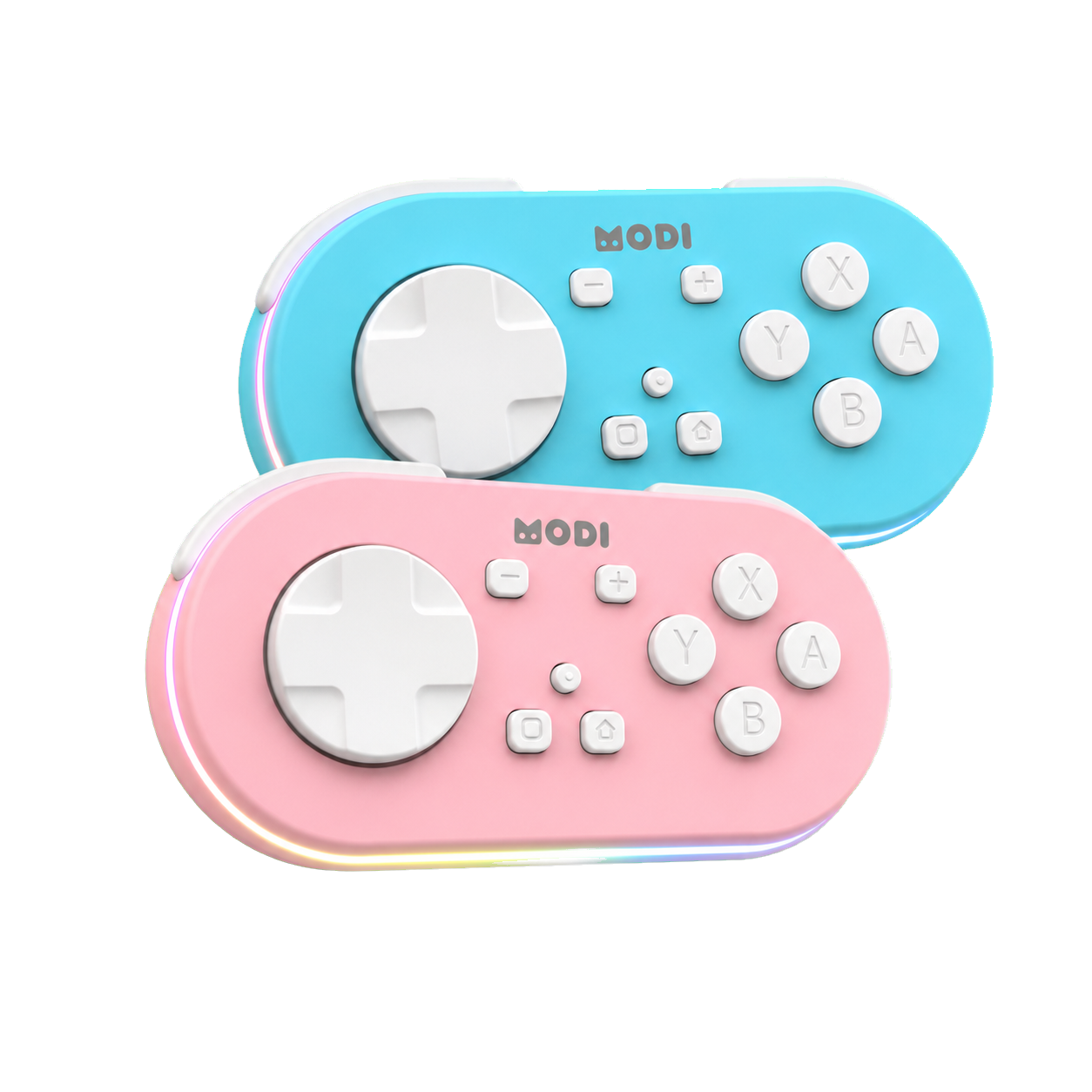
For nursing school Anki review, set up a remote around answer buttons first, then add only the controls you actually use for mixed text, image, and scenario cards. MODI can work as a Bluetooth Anki remote in documented keyboard or gamepad-style workflows, depending on device and app. The practical goal is simple: make Again, Hard, Good or Next, Easy, Undo, and Suspend easy to reach without turning the setup into a complicated control scheme.
For nursing school Anki review, set up a remote around answer buttons first, then add only the controls you actually use for mixed text, image, and scenario cards. MODI can work as a Bluetooth Anki remote in documented keyboard or gamepad-style workflows, depending on device and app. The practical goal is simple: make Again, Hard, Good or Next, Easy, Undo, and Suspend easy to reach without turning the setup into a complicated control scheme.
MODI is an independent Bluetooth accessory, not an official Anki, AnkiMobile, or AnkiDroid product. Its setup depends on the mode you choose, the device you review on, and the controls supported inside that app. Use Keyboard Mode for a straightforward desktop workflow, or Switch Mode when you want configurable gamepad-style inputs on mobile. If you need the full pairing sequence before choosing buttons, place complete MODI setup tutorial in your setup path first, then return to the workflow choices below.
Actions
Start with the four answer actions because nursing decks often move between quick recall cards and longer judgment cards. Desktop Anki supports common keyboard review controls such as Space or Enter to reveal an answer or choose Good, and 1 through 4 for answer buttons when those buttons are available. MODI Keyboard Mode includes preset inputs for Again, Hard, Good or Next, and Easy, so many desktop users can review without installing the optional MODI add-on.
Do not assign every possible command on day one. A useful nursing review layout usually keeps the main answer choices on the most reachable buttons, then reserves secondary controls for cards that need a correction or pause. If you are using desktop Anki and want custom remapping, Switch Mode with the optional MODI add-on can be configured after installation. That add-on extends desktop Anki, but it is not required for the default Keyboard Mode workflow.
Media
Mixed media cards change what the remote needs to do. Text-only cards can often be handled with reveal and answer controls, while image occlusion, diagrams, medication tables, or scenario prompts may require more navigation before you choose an answer. MODI Keyboard Mode includes Spacebar and direction-key navigation presets, which can help when the review screen or browser-style workflow responds to those inputs. The app still decides which keyboard inputs affect the visible card.
For audio or media-heavy cards, keep one replay action reachable if your chosen app or mapping supports it. Switch Mode defaults include Replay Audio along with Space or Good, Easy, Again, Hard, and Undo. Avoid assuming that every image, field, or embedded media element will respond to a remote command the same way. When a specific card type behaves differently, test that note type inside the actual device and app combination you plan to use regularly.
Undo
Nursing review often includes borderline decisions, so Undo deserves a reachable button. A missed tap on Again instead of Good, or an accidental reveal before reading a full scenario, is easier to handle when Undo is part of the layout. MODI includes Undo in Keyboard Mode presets and Switch Mode defaults. Treat Undo as a review correction tool, not a replacement for careful grading or for changing the underlying scheduling logic inside Anki.
Suspend is different from Undo. Use Suspend when a card should leave the active review flow, such as a duplicate, a confusing card that needs editing later, or a prompt that no longer matches your course material. MODI Keyboard Mode includes a preset Suspend input, and desktop users who need a custom arrangement can configure buttons through the optional add-on. Keep Suspend less exposed than answer buttons so it is available without being easy to hit accidentally.
Devices
Device choice determines the cleanest setup. On macOS, Windows, or Linux, Keyboard Mode is intended for desktop use with preset keybindings and does not need the MODI add-on for the default workflow. On iPhone, iPad, and Android, Switch Mode is the standard MODI mobile setup because it exposes gamepad-style inputs that the mobile apps can assign. Choose the device first, then choose the mode, then decide whether remapping is needed.
For AnkiMobile on iPhone or iPad, pair MODI in Switch Mode and configure actions inside Settings, Review, Gamepads. AnkiMobile provides configurable gamepad actions when iOS recognizes the controller profile. For AnkiDroid on Android, pair in Switch Mode and use Settings, Controls, Set Key Binds. If X, Y, B, and A appear visually swapped in AnkiDroid, that can be a display label mismatch; assigned commands can still function normally.
Layout
The recommended MODI orientation is vertical with the D-pad facing down. For nursing review, that orientation can make it easier to separate frequent answer choices from less frequent controls such as Undo, Suspend, Escape, or navigation. Keep the layout boring on purpose: answer, reveal, and correction commands should be predictable before you add lighting changes or app-specific shortcuts. A remote workflow is most useful when you can identify each button without checking the screen.
If you study on both a laptop and a phone, resist building two unrelated layouts. Keep the core answer meanings as consistent as the apps allow, then accept small differences caused by desktop keyboard controls versus mobile gamepad assignments. MODI can reconnect in the last-used mode when you press Home, but switching modes or moving devices is cleaner after forgetting saved MODI or Anki remote entries and pairing again in the desired mode.
Troubleshooting
When the remote connects but does not control Anki, separate Bluetooth pairing from app configuration. First confirm the mode: Keyboard Mode shows a solid green center LED after connection, while Switch Mode shows solid blue. Then check whether the app is listening for keyboard inputs, gamepad inputs, or custom add-on mappings. A successful Bluetooth connection alone does not prove that the current Anki screen has the command assigned to the button you pressed.
If behavior is still inconsistent after fresh pairing, forget every saved MODI or Anki remote entry in Bluetooth settings, repeat the full connection steps for the intended mode, and restart the host device if the remote connects but remains unresponsive. For longer sessions, keep decorative lighting off when it is not needed, because maximum practical battery life depends on that choice. A fast red LED means low battery; charging flashes green, and the charging LED turns off when complete.
Sources and product references
This first-party MODI guide was checked against the current product manual and relevant app documentation. App menus and third-party behavior can change after publication.