
Choose a keyboard if you review mainly at a desk and want direct access to Anki's built-in shortcuts without another device to manage. Choose a remote if you want review controls in your hand, especially when reaching for a laptop keyboard or tablet screen interrupts your flow. MODI is an independent Bluetooth accessory for supported Anki workflows, not an official Anki product or an Anki-made controller.
Choose a keyboard if you review mainly at a desk and want direct access to Anki’s built-in shortcuts without another device to manage. Choose a remote if you want review controls in your hand, especially when reaching for a laptop keyboard or tablet screen interrupts your flow. MODI is an independent Bluetooth accessory for supported Anki workflows, not an official Anki product or an Anki-made controller.
The practical difference is not that one setup replaces the other. A keyboard gives broad shortcut coverage and familiar desktop behavior, while MODI trades some key density for handheld access, portability, and button layouts that can be configured in the right mode or app. Your device, app, Bluetooth state, and willingness to configure actions should decide the setup before habits or aesthetics matter too much.
Where a Keyboard Still Makes Sense
A keyboard remains the simplest desktop choice when your hands are already near the computer. Desktop Anki supports common review controls, including Space or Enter to reveal an answer or choose Good, and number keys 1-4 for answer buttons when those buttons are available. It also keeps typing, browser lookup, note editing, and deck navigation in the same hardware path, which matters if review sessions often include more than pressing answer buttons.
Keyboard Mode on MODI is designed for macOS, Windows, and Linux desktop use, but that does not erase the keyboard’s advantage for full shortcut access. A full keyboard has labeled keys, modifier combinations, and fewer mode decisions. If you constantly switch between reviewing, editing cards, and using other desktop tools, staying with the computer keyboard may reduce setup choices and keep every command visible nearby.
Where a Remote Fits Better
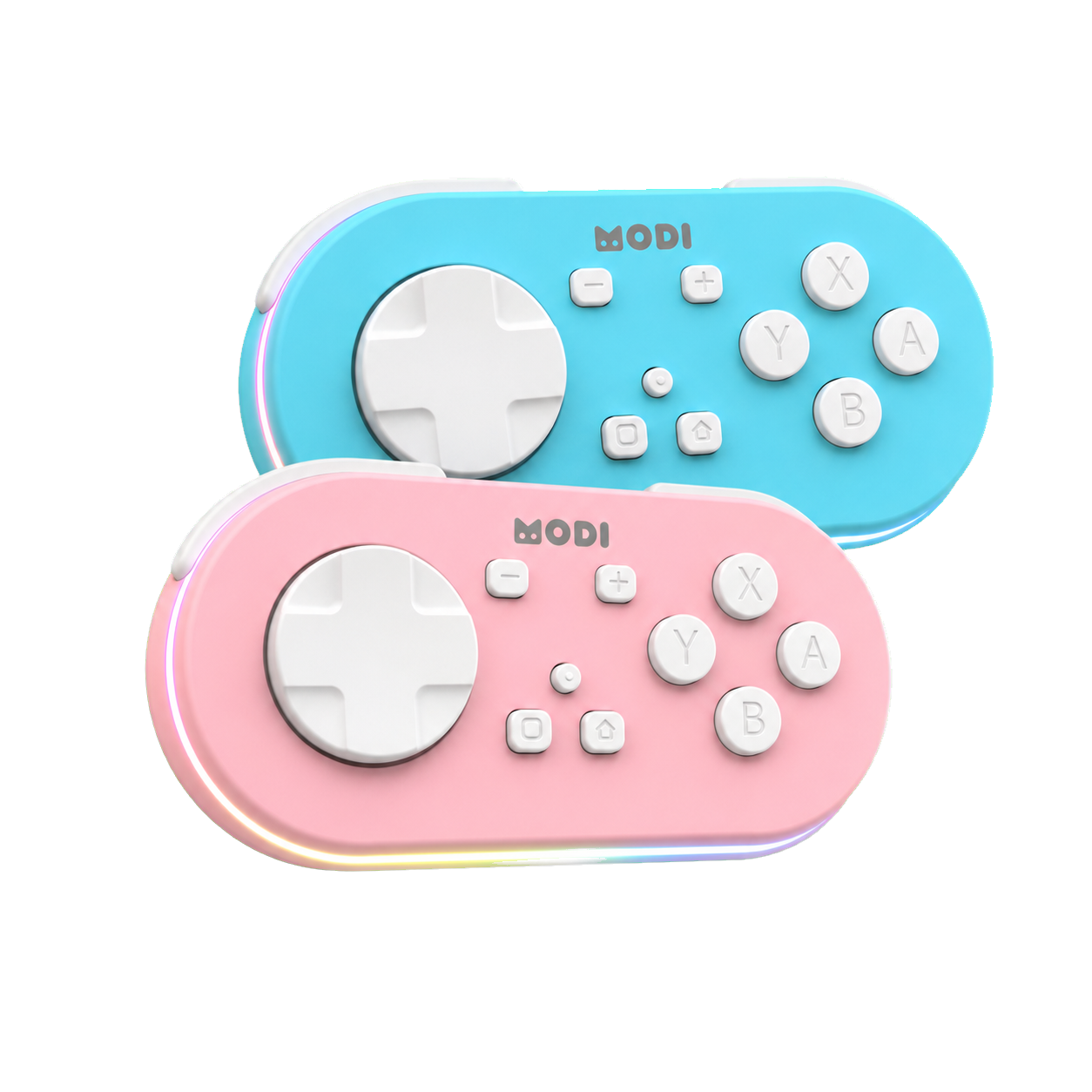
A remote starts to make sense when review actions are repetitive and the keyboard is not where your hand naturally rests. MODI’s documented controls cover common review inputs in Keyboard Mode, including Again, Hard, Good or Next, Easy, Undo, Suspend, Escape, Spacebar, and direction-key navigation. That set is narrower than a full keyboard, but it matches many review-only sessions where repeated answer actions dominate the task.
The recommended MODI orientation is vertical with the D-pad facing down, so the device is meant to be held rather than treated like a miniature keyboard. That can reduce reaching in some desk, couch, tablet, or standing setups, as a workflow choice rather than a treatment claim. It is also easier to move between supported devices than moving a full keyboard, provided Bluetooth pairings are managed cleanly.
Desktop Setup: Presets or Remapping
On a desktop computer, the setup question is really about presets versus customization. MODI Keyboard Mode connects through the computer’s Bluetooth settings after holding A + Home for one second, and it does not require an Anki add-on for the default workflow. The center LED turns solid green after a successful Keyboard Mode connection, which gives a clear mode signal before you start testing buttons.
If you want custom desktop remapping, Switch Mode and the optional MODI Anki add-on become relevant. The add-on is installed inside desktop Anki, then opened from Anki’s menu to configure buttons. This is MODI-specific configuration layered on top of desktop Anki; it should not be confused with a requirement for Keyboard Mode or with functionality built by Anki itself. Add-ons can also need attention after Anki changes.
Mobile Review Changes the Decision
On phones and tablets, the keyboard comparison changes because the apps expose different control settings. For MODI’s standard mobile setup, Switch Mode is recommended. It exposes gamepad-style inputs after pairing, rather than relying on desktop-style keyboard presets. That matters because AnkiMobile and AnkiDroid each provide their own configuration menus, so the remote is only part of the setup; the app assignment step matters too afterward.
In AnkiMobile, the relevant path is Settings, Review, then Gamepads, where actions can be assigned when iOS recognizes the controller profile. In AnkiDroid, the relevant path is Settings, Controls, then Set Key Binds. A third-party display mapping issue can show X-Y-B-A as Y-X-A-B in AnkiDroid’s menu, but that visual mismatch does not necessarily prevent assigned commands from working after the intended action choices are assigned.
Setup Effort and Troubleshooting
Keyboards usually require less setup effort because they are already connected and visible to the operating system. A remote adds Bluetooth state, mode selection, and saved-pairing history. With MODI, changing from Keyboard Mode to Switch Mode, or moving to another phone, tablet, or computer, should start by forgetting every saved MODI or Anki remote entry in Bluetooth settings before repeating the desired connection steps fully.
That troubleshooting path is not a blame assignment. If a remote connects but does not respond after a fresh pairing, the next documented step is to restart the host device and try again. Battery state, app configuration, Bluetooth records, and the selected mode can all affect behavior. A keyboard has fewer of those variables, while a remote gives you more placement and configuration options overall.
Use This Decision Checklist
Choose the keyboard when you review mostly at a desk, need broad shortcut access, edit cards during the same session, or dislike pairing and mode decisions. Choose MODI when the review task is mostly repeated answer selection, the device is not within easy reach, or you want a handheld controller that can work across supported desktop and mobile setups after correct pairing and app configuration.
If you choose MODI, start with the complete MODI setup tutorial for the current setup path, then test only the actions you actually use. Keep the decorative lights off when you do not need them if maximum practical battery life matters, and remember that MODI sleeps after a period without Bluetooth connection or inactivity. For a fair comparison, judge the keyboard and remote by the same real review routine.
See the remote and current buying options
Review the blue and pink MODI remotes, then open the appropriate Amazon listing when you are ready.
Sources and product references
This first-party MODI guide was checked against the current product manual and relevant app documentation. App menus and third-party behavior can change after publication.