
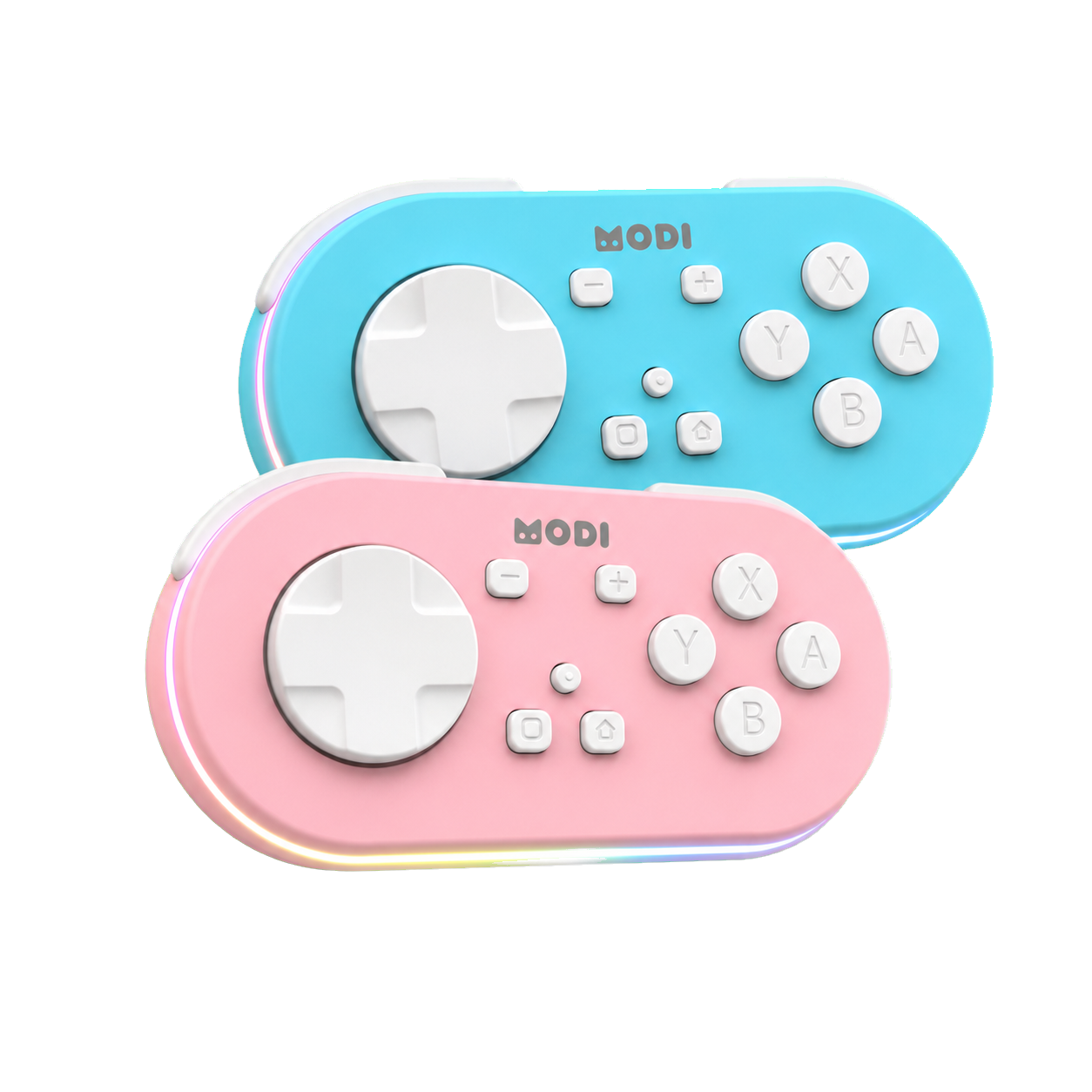
You need an Anki remote only if your current review setup has a real control problem: too much reaching, awkward tablet positioning, repeated shortcut hunting, or a desire to review one-handed away from the keyboard. If you already sit at a laptop and use Anki's built-in shortcuts comfortably, a remote may be unnecessary. The decision is less about buying a separate accessory and more about how you actually move through cards.
You need an Anki remote only if your current review setup has a real control problem: too much reaching, awkward tablet positioning, repeated shortcut hunting, or a desire to review one-handed away from the keyboard. If you already sit at a laptop and use Anki’s built-in shortcuts comfortably, a remote may be unnecessary. The decision is less about buying a separate accessory and more about how you actually move through cards.
MODI is a Bluetooth controller for Anki review workflows on supported desktop and mobile devices. It is independent from Anki, AnkiMobile, AnkiDroid, Quizlet, Apple, Google, Microsoft, and Amazon, so your choice still depends on the app and device accepting its keyboard or gamepad-style input. Use this guide to decide whether MODI fits your setup before you follow the complete MODI setup tutorial, rather than assuming every study habit needs new hardware.
Start With Your Friction
Begin with the moment that interrupts review. A remote is most relevant when your hands are not naturally near the keyboard, when a tablet is propped up, when a phone is held away from your other hand, or when repeated mouse movements break your rhythm. Those are practical control issues. They do not mean your learning will improve; they mean your input method may be mismatched to the place you study.
If the issue is understanding cards, deck quality, or scheduling, a remote is not the fix. It will not rewrite note types, choose answer buttons for you, or change Anki’s learning algorithm. It can only send supported inputs. A useful decision starts by separating review content problems from control problems, because only the second category is something an Anki remote can reasonably address during a session.
Know the Default Controls
On desktop, MODI’s Keyboard Mode is designed for macOS, Windows, and Linux with preset keybindings, and it does not require the MODI add-on for the default workflow. The useful question is whether those presets cover your normal review actions. Keyboard Mode includes inputs for Again, Hard, Good or Next, Easy, Undo, Suspend, Escape, Spacebar, and direction-key navigation, matching many common review patterns without extra mapping.
Switch Mode is different because it exposes gamepad-style inputs and is the standard MODI path for AnkiMobile on iPhone or iPad and AnkiDroid on Android. Its defaults include Space or Good, Easy, Again, Replay Audio, Hard, and Undo. On mobile, the final behavior is shaped by AnkiMobile’s gamepad action settings or AnkiDroid’s key bind settings, not by MODI alone after the controller is connected in the expected mode.
Decide How Much Customization Matters
If you want the buttons to behave in a very specific way on desktop Anki, customization becomes part of the decision. MODI offers an optional desktop Anki add-on for custom remapping, but that is a different workflow from the default Keyboard Mode setup. Add-ons extend desktop Anki and may need updates after Anki changes, so treat custom mapping as a configuration choice with some maintenance.
Mobile customization is handled inside the mobile apps. In AnkiMobile, the relevant area is Review Gamepads, where available actions can be assigned when iOS recognizes the controller profile. In AnkiDroid, the path is Controls and Set Key Binds. MODI can provide the input profile, but the app decides what actions are available, how they are labeled, and how those assignments are saved for later reviews.
When a Keyboard Is Enough
A regular keyboard is often enough if you review at a desk, keep both hands near the computer, and use only standard Anki controls. Desktop Anki supports common keyboard behavior such as Space or Enter to reveal an answer or choose Good, and number keys 1 through 4 for answer buttons when those buttons are available. In that situation, a separate remote may add little benefit.
A keyboard can also be the simpler choice when you change applications constantly, rely on shortcuts outside Anki, or share a computer with saved Bluetooth accessories you do not control. MODI is intended for supported input workflows, not universal command of every website or program. For Quizlet, for example, the relevant supported use is a desktop-browser Keyboard Mode workflow for basic direction-key and Spacebar-style controls.
Match the Remote to Your Devices
Device mix matters because MODI has two connection modes with different roles. Keyboard Mode is the usual desktop choice when preset keybindings are enough. Switch Mode is used when a desktop user wants custom remapping through the add-on, and it is recommended for the standard AnkiMobile and AnkiDroid setup because those apps can work with controller-style inputs. Choose based on the device you actually review on.
If you move between a laptop, phone, and tablet, the decision includes pairing discipline. MODI reconnects in the last-used mode when you press Home, but switching modes or moving to another device is best handled by forgetting saved MODI or Anki remote entries and pairing again. That is manageable for a stable routine, but it may feel tedious if your review device changes every session.
Make the Practical Call
MODI is most sensible when you can name the control problem, know the device you will use, and are comfortable choosing the mode that fits that device. It is especially relevant if you want one-handed review controls, prefer not to reach for a keyboard during cards, or need mobile gamepad-style inputs inside AnkiMobile or AnkiDroid. Those are setup preferences, not promises about study results or outcomes.
Skip or postpone an Anki remote if your present shortcuts already feel natural, if you mainly need better card design, or if you do not want to manage Bluetooth pairings and app settings. Consider MODI when the friction is clearly physical input, not the learning task itself. The strongest decision is specific: device, mode, default or custom controls, and a clear reason the keyboard is no longer enough.
See the remote and current buying options
Review the blue and pink MODI remotes, then open the appropriate Amazon listing when you are ready.
Sources and product references
This first-party MODI guide was checked against the current product manual and relevant app documentation. App menus and third-party behavior can change after publication.