
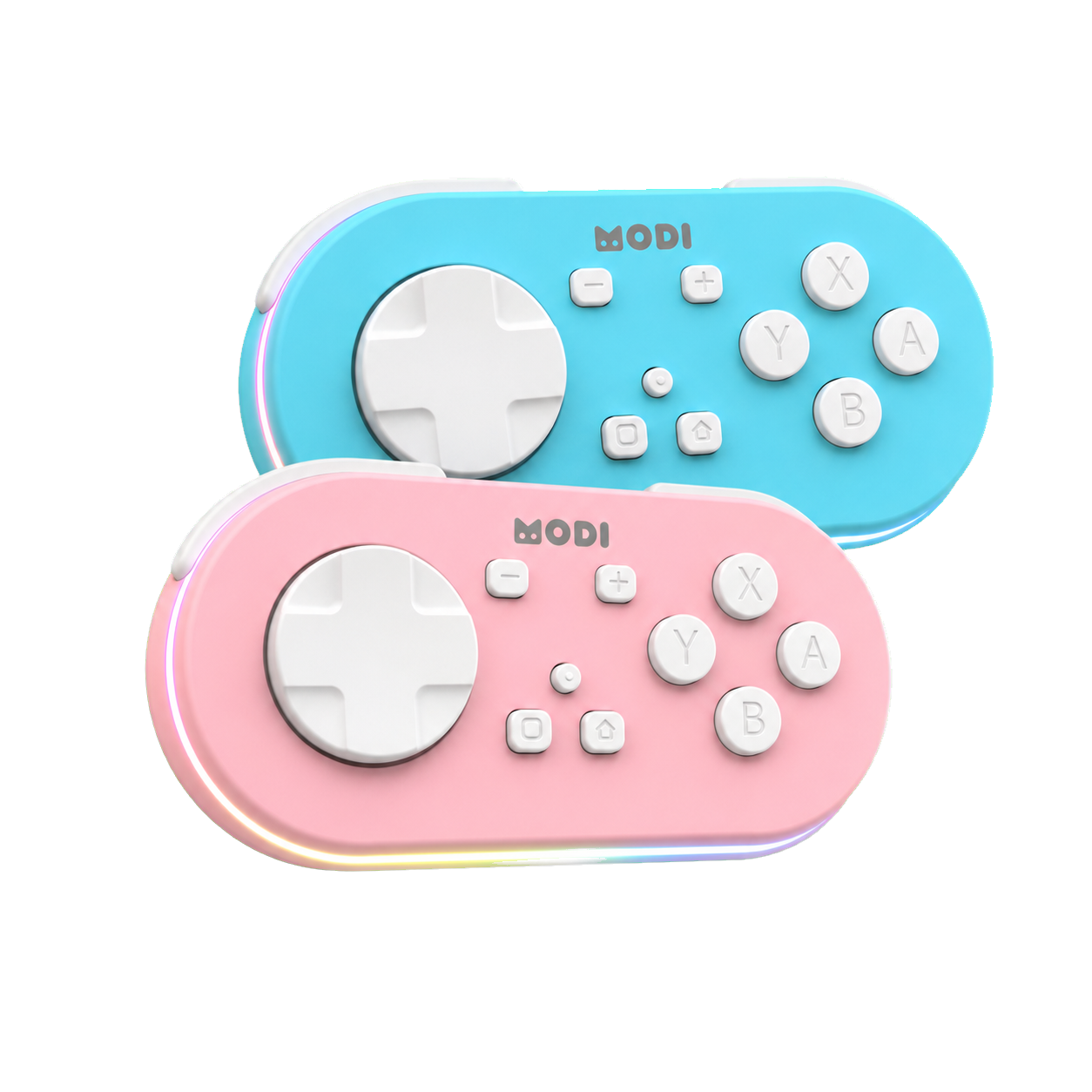
If your Bluetooth menu shows more than one MODI or Anki remote entry, do not guess which saved device is current. Remove every saved MODI-related entry, then rebuild one clean pairing in the mode you actually need. Duplicate entries usually mean the host device has remembered more than one connection profile, often after switching between Keyboard Mode and Switch Mode or moving the remote between a computer, phone, or tablet.
If your Bluetooth menu shows more than one MODI or Anki remote entry, do not guess which saved device is current. Remove every saved MODI-related entry, then rebuild one clean pairing in the mode you actually need. Duplicate entries usually mean the host device has remembered more than one connection profile, often after switching between Keyboard Mode and Switch Mode or moving the remote between a computer, phone, or tablet.
The goal is to leave Bluetooth with one known entry and one known behavior. MODI is an independent Bluetooth accessory for Anki workflows, not an official Anki, AnkiMobile, or AnkiDroid product, so troubleshooting has two sides: the remote’s documented mode and LED behavior, and the host app’s own input settings. Start with Bluetooth cleanup before changing Anki settings, add-ons, or mobile keybinds.
Saved Entries
Open the Bluetooth settings on the computer, phone, or tablet where the duplicate names appear. Look for every saved item that could represent MODI, an Anki remote, or an earlier pairing attempt. The exact label can vary by host device, so treat ambiguous entries as stale until proven otherwise. A connection that says paired is not necessarily the one your review app is listening to, especially after mode changes.
This step matters because Keyboard Mode and Switch Mode present different input behavior. Keyboard Mode is intended for desktop use with preset keybindings. Switch Mode is used for gamepad-style inputs and is the standard MODI mobile setup for AnkiMobile and AnkiDroid. If both profiles have been saved at different times, the device may reconnect to an entry that looks familiar but does not match the setup you are trying to use.
Forget Everything
Forget, remove, or unpair every saved MODI-related entry from Bluetooth settings before pairing again. Do this even if one entry looks newer than the others. The documented starting point when changing modes or moving MODI to another device is to forget every saved MODI or Anki remote entry, then repeat the full connection steps for the desired mode. Partial cleanup can leave the same ambiguity behind.
After removing the saved entries, pause before immediately pressing buttons. If the remote is awake, you can hold Home for three seconds to put it to sleep or turn it off. Then begin from a predictable state. This does not erase Anki decks or app settings; it only clears the host device’s saved Bluetooth relationship with the remote. If you need the full setup path later, use complete MODI setup tutorial for the broader walkthrough.
Choose Mode
Pick one mode before pairing, based on the device and app you plan to use now. For desktop Anki on macOS, Windows, or Linux, Keyboard Mode is the default workflow and does not require the MODI add-on. For a desktop user who wants custom remapping through the MODI add-on, Switch Mode is the relevant choice. For AnkiMobile on iPhone or iPad and AnkiDroid on Android, use Switch Mode for the standard setup.
Avoid pairing both modes during the same troubleshooting pass. If you pair Keyboard Mode, test Keyboard Mode. If you pair Switch Mode, test Switch Mode. Mixing steps makes it harder to tell whether a failure comes from the saved Bluetooth entry, the selected mode, the app’s input settings, or the host device’s own Bluetooth state. Once one clean connection works, you can intentionally switch modes later by forgetting saved entries again and repeating the correct pairing sequence.
Pair Once
For Keyboard Mode, open Bluetooth settings, hold A and Home for one second, then select the MODI connection when it appears. A successful Keyboard Mode connection is shown by the center LED becoming solid green. That green indicator is useful because it confirms the remote connected in the mode that sends the preset desktop-style inputs, rather than a gamepad-style profile intended for Switch Mode workflows.
For Switch Mode, open Bluetooth settings, hold Y and Home for one second, then select the MODI connection. A successful Switch Mode connection is shown by the center LED becoming solid blue. If the remote had previously connected to another saved profile, do not rely on the old entry. The clean test is one forgotten Bluetooth list, one fresh pairing attempt, and one LED color that matches the mode you selected.
Verify Actions
After the LED confirms the mode, test actions in the app you actually plan to review with. In desktop Anki Keyboard Mode, preset inputs include common review controls such as Again, Hard, Good or Next, Easy, Undo, Suspend, Escape, Spacebar, and direction-key navigation. Desktop Anki also supports familiar keyboard controls, including Space or Enter for reveal or Good and number keys for answer buttons when those buttons are available.
On mobile, verification happens inside the app’s control settings. In AnkiMobile, use Settings, Review, Gamepads, then assign the desired actions after iOS recognizes the controller profile. In AnkiDroid, use Settings, Controls, Set Key Binds. AnkiDroid can show X-Y-B-A inputs as Y-X-A-B because of a third-party display mapping issue. Treat that as a visual label mismatch, then confirm whether the assigned commands function normally during review.
Next Checks
If the remote connects but remains unresponsive after a fresh pairing, restart the host device and try again. This is a practical next diagnostic step because Bluetooth state, saved pairings, app configuration, battery state, and host-device behavior can all affect the result. Do not assume every duplicate-entry problem is caused by the remote itself. The simplest reliable sequence is cleanup, one mode choice, fresh pairing, LED check, then app-level action testing.
Also check that the remote is awake and charged enough to test. MODI sleeps automatically after about 2.5 minutes without a Bluetooth connection or five minutes of inactivity. A quickly flashing red LED indicates low battery, while charging flashes green and the charging LED turns off when complete. Decorative lighting can be turned off separately with a double-click of the Light button, but do not infer battery percentage from lighting patterns the manual does not define.
Sources and product references
This first-party MODI guide was checked against the current product manual and relevant app documentation. App menus and third-party behavior can change after publication.