
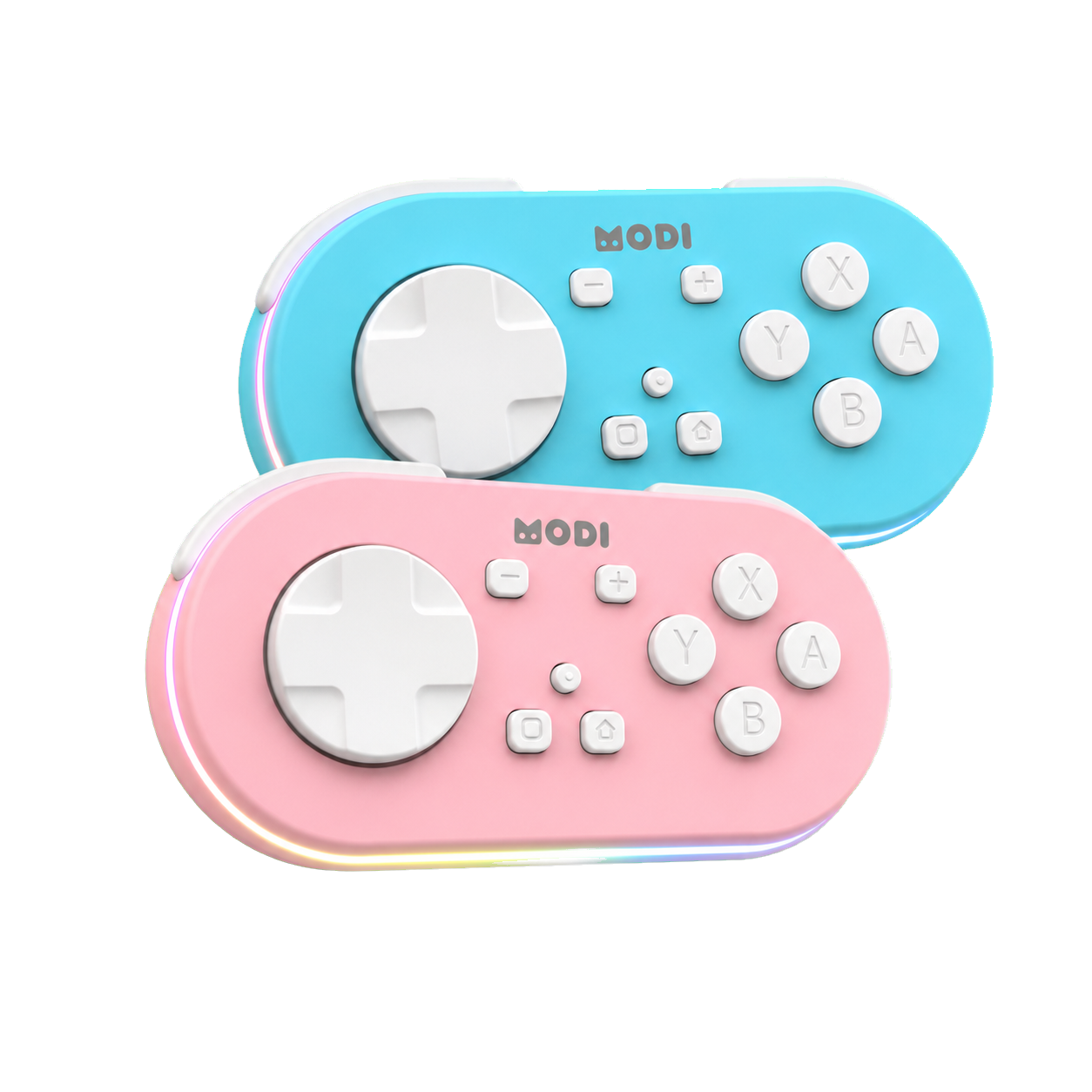
An Anki remote is a Bluetooth controller that sends button presses to Anki as keyboard or gamepad inputs. It can reveal cards, choose answer buttons, move through review screens, and trigger mapped actions when the app accepts those inputs. The remote does not change Anki's scheduling, card content, sync, or learning algorithm; it only provides another way to send review commands.
An Anki remote is a Bluetooth controller that sends button presses to Anki as keyboard or gamepad inputs. It can reveal cards, choose answer buttons, move through review screens, and trigger mapped actions when the app accepts those inputs. The remote does not change Anki’s scheduling, card content, sync, or learning algorithm; it only provides another way to send review commands.
MODI is one example of an Anki remote. It is an independent accessory, not a product made, endorsed, or certified by Anki, AnkiMobile, AnkiDroid, Quizlet, Apple, Google, Microsoft, or Amazon. That distinction matters because the remote provides input signals, while each app decides which signals are recognized, configurable, ignored, or displayed under different labels.
What The Remote Actually Sends
A Bluetooth review remote does not understand your deck or decide whether a card was hard. It sends input events, much like a small keyboard or game controller. In Keyboard Mode, MODI is intended for macOS, Windows, and Linux desktop use with preset keybindings. Desktop Anki can then interpret those keystrokes as normal study-screen commands.
In Switch Mode, MODI exposes gamepad-style inputs. That mode is used when desktop users want custom remapping through the optional MODI Anki add-on, and it is the standard MODI mobile setup for AnkiMobile on iPhone or iPad and AnkiDroid on Android. The practical result is the same idea: buttons become commands only after the receiving app recognizes them.
Common Review Actions
The actions people usually expect from an Anki remote are ordinary review controls. Depending on the mode and app configuration, buttons may reveal the answer, choose Again, Hard, Good, or Easy, replay audio, undo an action, suspend a card, leave the current screen, or move with direction-key navigation. These are review inputs, not changes to card data by themselves.
Desktop Anki already supports common keyboard controls such as Space or Enter to reveal an answer or choose Good, and 1 through 4 for answer buttons when those buttons are available. MODI’s Keyboard Mode uses preset inputs for actions including Again, Hard, Good or Next, Easy, Undo, Suspend, Escape, Spacebar, and direction-key navigation.
Where Configuration Happens
The remote provides the button signal, but app configuration still decides the working behavior. On desktop, the default Keyboard Mode workflow does not require an Anki add-on. A user can pair the controller in the operating system’s Bluetooth settings, then rely on the preset keystrokes that desktop Anki already understands during reviews.
Custom desktop remapping is a separate workflow. The optional MODI add-on, code 406900239, lets desktop Anki users configure buttons inside Anki after installation and restart. On mobile, configuration lives in the app: AnkiMobile uses Settings, Review, Gamepads, while AnkiDroid uses Settings, Controls, Set Key Binds. For setup paths, use complete MODI setup tutorial before remapping.
Mode Choice Matters
The phrase Anki remote can hide an important detail: different connection modes can send different kinds of input. Keyboard Mode is aimed at desktop systems because it sends preset keyboard controls. Switch Mode is used for gamepad-style input, which is why it is the recommended MODI path for AnkiMobile and AnkiDroid configuration.
If a remote appears connected but does not control reviews, the mode may be wrong for the app, or the app may not have the expected mapping assigned. When changing modes or moving the remote to another phone, tablet, or computer, the preferred starting point is to forget saved MODI or Anki remote Bluetooth entries, then pair again in the desired mode.
Compatibility Boundaries
Compatibility is not universal just because a device uses Bluetooth. A remote works when the target app or website accepts the keyboard or gamepad input being sent. Desktop Anki, AnkiMobile, and AnkiDroid each expose their own supported controls and settings, so the same physical button can depend on mode, operating system recognition, and app-level mapping.
This also applies outside Anki. Quizlet use is described as a desktop-browser Keyboard Mode workflow for basic direction-key and Spacebar-style controls. That does not mean every website, browser, presentation program, or shortcut system will respond. The practical test is whether the active software accepts the current input type and assigns it to a useful command.
What It Does Not Control
An Anki remote does not edit scheduling rules, install add-ons automatically, repair Bluetooth settings, or make unsupported apps support controllers. It also does not guarantee that every visible button label in a third-party app will match the physical button name. On AnkiDroid, X-Y-B-A inputs can appear as Y-X-A-B in the menu because of a display mapping issue.
That mismatch is visual; assigned commands can still function normally. When troubleshooting, separate the layers: battery state, Bluetooth pairing, selected mode, operating system recognition, and app configuration can all affect the result. If fresh pairing succeeds but the remote remains unresponsive, restarting the host device and trying again is a reasonable next diagnostic step.
How To Think About It
The simplest way to understand an Anki remote is as a compact input device for review sessions. It can reduce reaching for a keyboard or screen by putting common commands under dedicated buttons, especially when used vertically with the D-pad facing down as MODI recommends. That is a workflow choice, not a promise about comfort, health, speed, or results.
A good setup starts by matching the input mode to the app, then confirming the app’s own controls. Keyboard Mode suits preset desktop keystrokes, while Switch Mode suits gamepad-style mobile setup and custom desktop remapping. Once that division is clear, the remote’s role is straightforward: it sends button presses, and Anki or the chosen app decides what those presses control.
See the remote and current buying options
Review the blue and pink MODI remotes, then open the appropriate Amazon listing when you are ready.
Sources and product references
This first-party MODI guide was checked against the current product manual and relevant app documentation. App menus and third-party behavior can change after publication.