
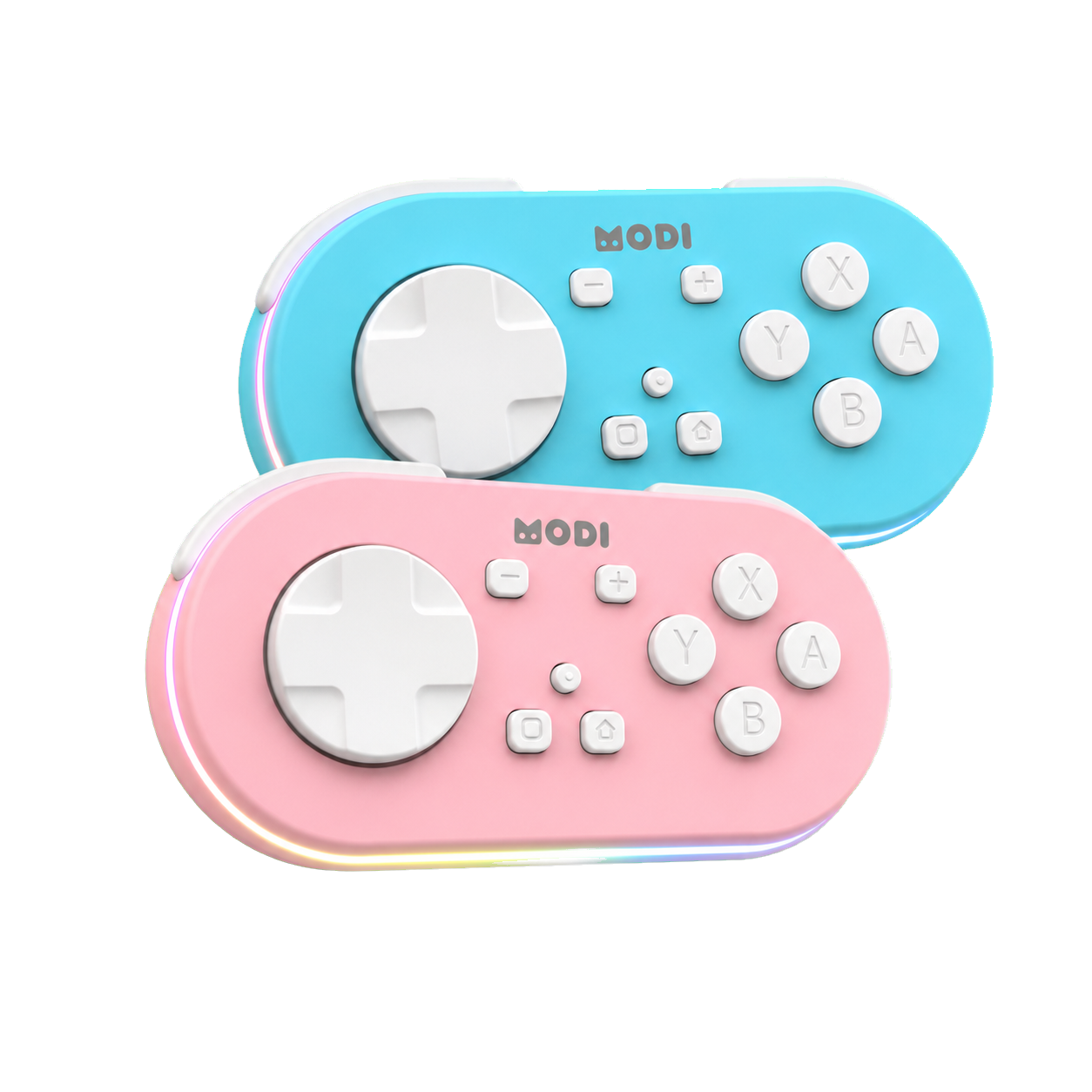
Again, Hard, Good, and Easy are Anki answer choices, not MODI grading rules. Again means the card was not recalled well enough, Hard means it was recalled with difficulty, Good means it was recalled normally, and Easy means it felt easier than a normal successful recall. A remote can make those choices reachable from your hand, but Anki still decides what the choices mean inside its scheduler. MODI is an independent Bluetooth accessory for supported Anki workflows, and it is not made, endorsed, or certified by Anki, AnkiMobile, or AnkiDroid.
Again, Hard, Good, and Easy are Anki answer choices, not MODI grading rules. Again means the card was not recalled well enough, Hard means it was recalled with difficulty, Good means it was recalled normally, and Easy means it felt easier than a normal successful recall. A remote can make those choices reachable from your hand, but Anki still decides what the choices mean inside its scheduler. MODI is an independent Bluetooth accessory for supported Anki workflows, and it is not made, endorsed, or certified by Anki, AnkiMobile, or AnkiDroid.
For a MODI user, the practical question is which physical button should send the input for each Anki answer choice. Keyboard Mode includes preset review inputs for Again, Hard, Good or Next, and Easy on desktop. Switch Mode can expose gamepad-style inputs for mobile configuration. If you are still pairing or choosing modes, start with the complete MODI setup tutorial before refining your answer-button layout, because mapping choices only help after the remote and app are communicating correctly.
Again
Again is the choice for a card you did not answer successfully enough to pass. In Anki’s review screen, selecting Again tells Anki that the item needs another look rather than moving forward as remembered. It is a self-rating button, not a punishment and not proof that the card is flawed. The exact scheduling result belongs to Anki’s own review system, so a remote guide should treat Again as an input you may want close by.
On MODI, Again can be available through the desktop Keyboard Mode presets, and it can also be assigned through supported app or add-on controls where remapping is used. The useful workflow point is consistency: put Again somewhere you can identify without looking, especially if you review with the recommended vertical orientation and D-pad facing down. Avoid treating the remote position as advice about when to choose Again; that judgment remains yours while reviewing each card.
Hard
Hard is the answer choice for a card you got through, but with noticeable difficulty. It sits between Again and Good in the review decision. In normal use, that means you are telling Anki the answer was not a complete miss, but it was not smooth enough for your usual Good response. The label is an app-level meaning from Anki, not a special MODI feature or a separate study method created by the remote.
For remote use, Hard is worth mapping deliberately because it can be overlooked if the control is awkward. Keyboard Mode includes a preset input for Hard on desktop. In Switch Mode, mobile apps expose their own configurable action lists when they recognize the controller input. A practical remote layout makes Hard physically distinct from Again and Good, but it should not pressure you into a grading strategy or promise a better result.
Good
Good is the central answer choice for many reviews because it commonly advances after you reveal a correct answer. Desktop Anki also documents keyboard behavior where Space or Enter can reveal an answer or choose Good, depending on the review state and available buttons. That matters for remote users because a single physical control may feel like a next button, but it is still sending an input interpreted by Anki’s current screen.
MODI Keyboard Mode includes preset support for Good or Next, along with Spacebar-style review control. This is useful when you want a simple desktop setup without installing the optional add-on. On mobile, Switch Mode is the standard MODI setup, and AnkiMobile or AnkiDroid handles the action assignment in its own settings. Keep the distinction clear: MODI sends keyboard or gamepad-style input, while the Anki app decides whether that input reveals, advances, or records Good.
Easy
Easy is the choice for a card that felt easier than a normal successful recall. It is not a badge, score, or recommendation to speed through a deck. Like the other answer buttons, Easy is a self-rating within Anki’s review flow. The important remote-user detail is that Easy should remain available when the review screen presents it, but it does not need to be treated as the main advance control for every card.
In Keyboard Mode, MODI includes a preset input for Easy on desktop Anki. In Switch Mode, you can map supported mobile controls to the actions offered by AnkiMobile or AnkiDroid. Some cards or study states may present different available buttons, so do not assume every screen behaves identically. If a button seems wrong, check whether the app is showing Easy at that moment before deciding that the remote pairing or mapping has failed.
Remote Mapping
A useful remote layout starts by separating app behavior from device behavior. Desktop Anki supports common keyboard controls, and MODI Keyboard Mode sends preset inputs for review actions such as Again, Hard, Good or Next, Easy, Undo, Suspend, Escape, Spacebar, and direction-key navigation. No Anki add-on is required for that default Keyboard Mode workflow. The optional MODI desktop add-on is for custom remapping when you want different button assignments inside desktop Anki.
Mobile setup is different. For AnkiMobile on iPhone and iPad, Switch Mode is the standard MODI setup, and actions are assigned in AnkiMobile’s Gamepads settings. For AnkiDroid on Android, Switch Mode is also standard, with actions assigned under Controls and Set Key Binds. AnkiDroid can display X-Y-B-A inputs as Y-X-A-B because of a third-party label mismatch, so test assigned commands by function rather than relying only on the visible label.
Troubleshooting
If Again, Hard, Good, or Easy does not respond, start with the simplest boundary: is MODI connected in the mode your setup expects? Keyboard Mode is intended for desktop use with preset keybindings, while Switch Mode is recommended for the standard mobile setup and for desktop users who want add-on remapping. A successful Keyboard Mode connection shows a solid green center LED, and a successful Switch Mode connection shows a solid blue center LED.
When changing modes or moving to another device, forget every saved MODI or Anki remote Bluetooth entry before pairing again in the desired mode. If the remote connects but review actions remain unresponsive after fresh pairing, restart the host device and try again. Then check the app’s own mappings. This sequence avoids blaming one component too early, because Bluetooth state, saved pairings, battery state, app configuration, and host-device behavior can all affect review controls.
Sources and product references
This first-party MODI guide was checked against the current product manual and relevant app documentation. App menus and third-party behavior can change after publication.