
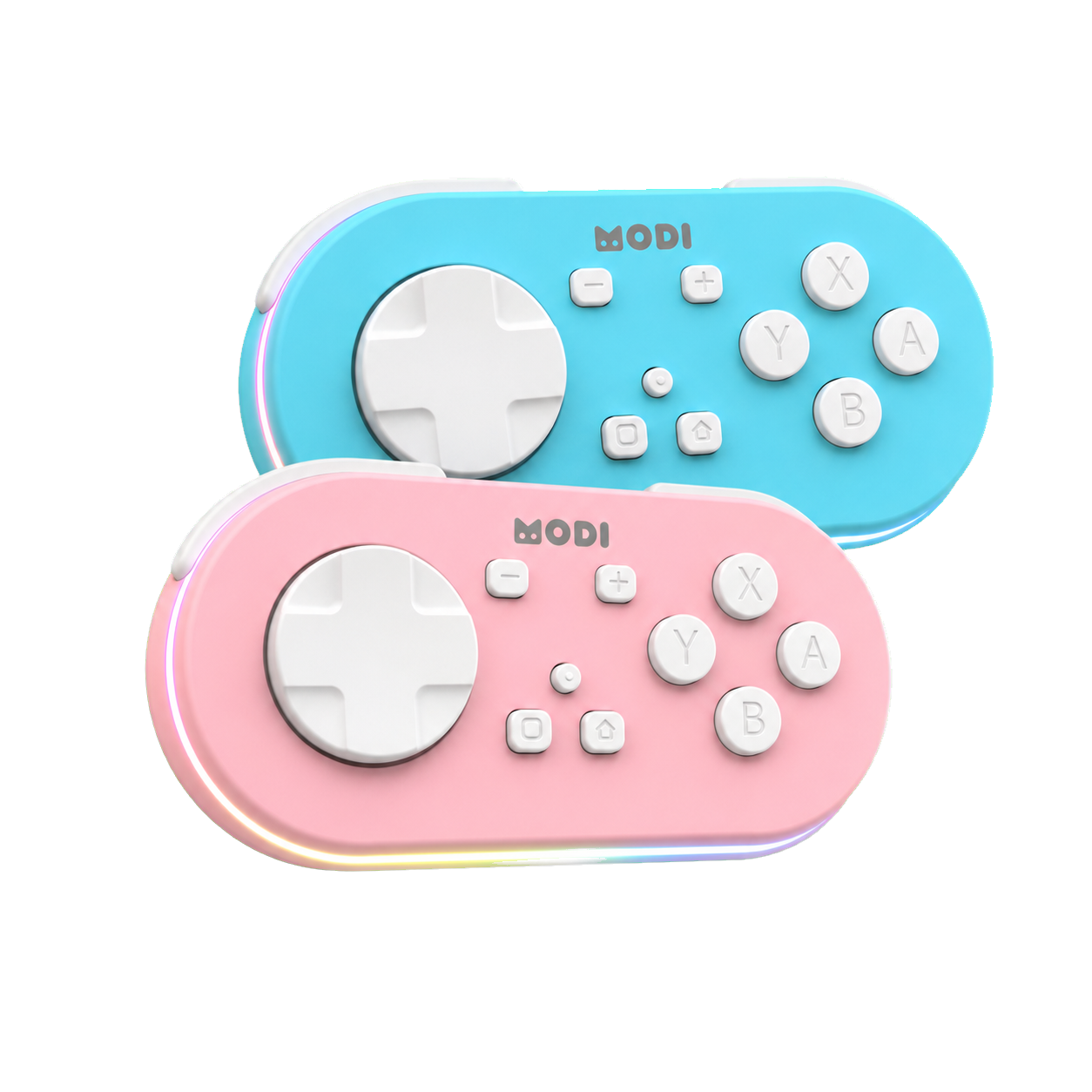
A one-handed Anki review setup starts with three choices: place the device where your reviewing hand rests naturally, keep only essential answer actions on the easiest buttons, and test the layout in a short session before relying on it. With MODI, that usually means using the recommended vertical orientation with the D-pad facing down, then mapping or selecting controls that match the app and device you are actually using.
A one-handed Anki review setup starts with three choices: place the device where your reviewing hand rests naturally, keep only essential answer actions on the easiest buttons, and test the layout in a short session before relying on it. With MODI, that usually means using the recommended vertical orientation with the D-pad facing down, then mapping or selecting controls that match the app and device you are actually using.
MODI is an independent Bluetooth accessory for Anki review workflows on supported computers, phones, and tablets; it is not made or certified by Anki, AnkiMobile, AnkiDroid, or device makers. This guide focuses on layout decisions after you have paired the remote. For pairing details, mode choice, and platform-specific setup, use the complete MODI setup tutorial and return here to refine the one-handed review arrangement.
Placement
Start by deciding where the remote will sit during reviews. A one-handed setup works best when the hand does not need to chase the device between cards, so put MODI on the same side as the reviewing hand, close enough that the thumb can reach primary buttons without lifting the whole palm. If you hold it, keep your grip loose enough to press the answer controls consistently rather than stretching for every command.
If you review at a desk, try the remote beside the keyboard, beside a tablet stand, or lightly held in the reviewing hand while the screen stays centered. If you review on a phone, avoid balancing the phone and remote in a way that forces accidental presses. The point is not to prove a single ergonomic rule; it is to create a repeatable layout that reduces unnecessary reaching during the session.
Orientation
Use MODI in the recommended vertical orientation, with the D-pad facing down, as the starting point for a one-handed review layout. That orientation gives you a consistent mental map: the lower area can handle directional or secondary movement, while the face buttons and bumpers can be reserved for review actions. Keeping the same orientation across desktop and mobile sessions also makes troubleshooting easier because you are not changing grip and software settings at once.
Once the vertical orientation feels stable, avoid rotating the remote just to match a single button label unless the app requires a different mapping. The important part is that your hand learns a reliable pattern. If a button feels awkward in the first few minutes, move a less frequent action there rather than forcing the primary answer command onto it. Small layout changes are easier to evaluate when the physical orientation stays unchanged.
Actions
Choose the few actions that decide most cards before adding extra commands. In Anki review, the essential set is usually reveal or advance, then answer choices such as Again, Hard, Good, and Easy when those buttons are available. Desktop Anki also supports common keyboard controls, including Space or Enter to reveal an answer or choose Good, and number keys for answer buttons when those choices are shown.
For a one-handed layout, put the most common action on the easiest press and keep Again separate enough that you do not hit it by mistake. Undo can be useful, but it should not displace the answer controls you need every card. Suspend, Escape, replay audio, or navigation controls can be added after the core answer flow is stable. Treat those as workflow choices, not required parts of every one-handed setup.
Desktop
On a desktop computer, MODI Keyboard Mode is intended for macOS, Windows, and Linux use with preset keybindings, and the default Keyboard Mode workflow does not require an Anki add-on. That makes it a sensible first pass when you want a simple one-handed review controller. The remote sends inputs, while desktop Anki decides what those inputs do according to its study screen behavior and any settings already active in Anki.
If you want custom remapping on desktop, Switch Mode can be used with the optional MODI Anki add-on. The add-on extends desktop Anki and may need updates after Anki changes, so separate add-on troubleshooting from Bluetooth troubleshooting. When refining a one-handed layout, change one layer at a time: confirm the remote is connected in the intended mode, confirm Anki responds, then adjust button assignments only after the basic answer flow works.
Mobile
For AnkiMobile on iPhone and iPad, use Switch Mode for the standard MODI mobile setup, then assign actions in AnkiMobile’s gamepad settings. In this case, iOS recognizes the controller profile and AnkiMobile provides the configurable action list. MODI is not deciding which AnkiMobile command each gamepad input performs; the app’s Review and Gamepads settings are where the one-handed layout becomes specific to your review habits.
For AnkiDroid on Android, use Switch Mode and configure actions through Settings, Controls, and Set Key Binds. A known third-party display mapping issue can make X-Y-B-A inputs appear as Y-X-A-B in the AnkiDroid menu. Treat that as a label mismatch during setup, not proof that the assigned commands cannot work. Test the actual card actions after assigning them, because the functional behavior is what matters for the final layout.
Validation
Before using the layout for a full study block, run a short validation session with cards you can afford to review slowly. Check whether you can reveal, answer Again, choose Good or the equivalent advance action, and undo a mistaken input if you assigned Undo. Watch for two different problems: physical misses caused by placement or grip, and software misses caused by mode, app settings, or saved Bluetooth pairings.
If the remote connects but does not respond as expected, do not assume the cause immediately. Bluetooth state, old pairings, battery state, host-device behavior, and app configuration can all matter. When changing modes or moving to another device, forget saved MODI or Anki remote entries and pair again in the desired mode. If a fresh pairing still connects but remains unresponsive, restart the host device and repeat the test.
Sources and product references
This first-party MODI guide was checked against the current product manual and relevant app documentation. App menus and third-party behavior can change after publication.