
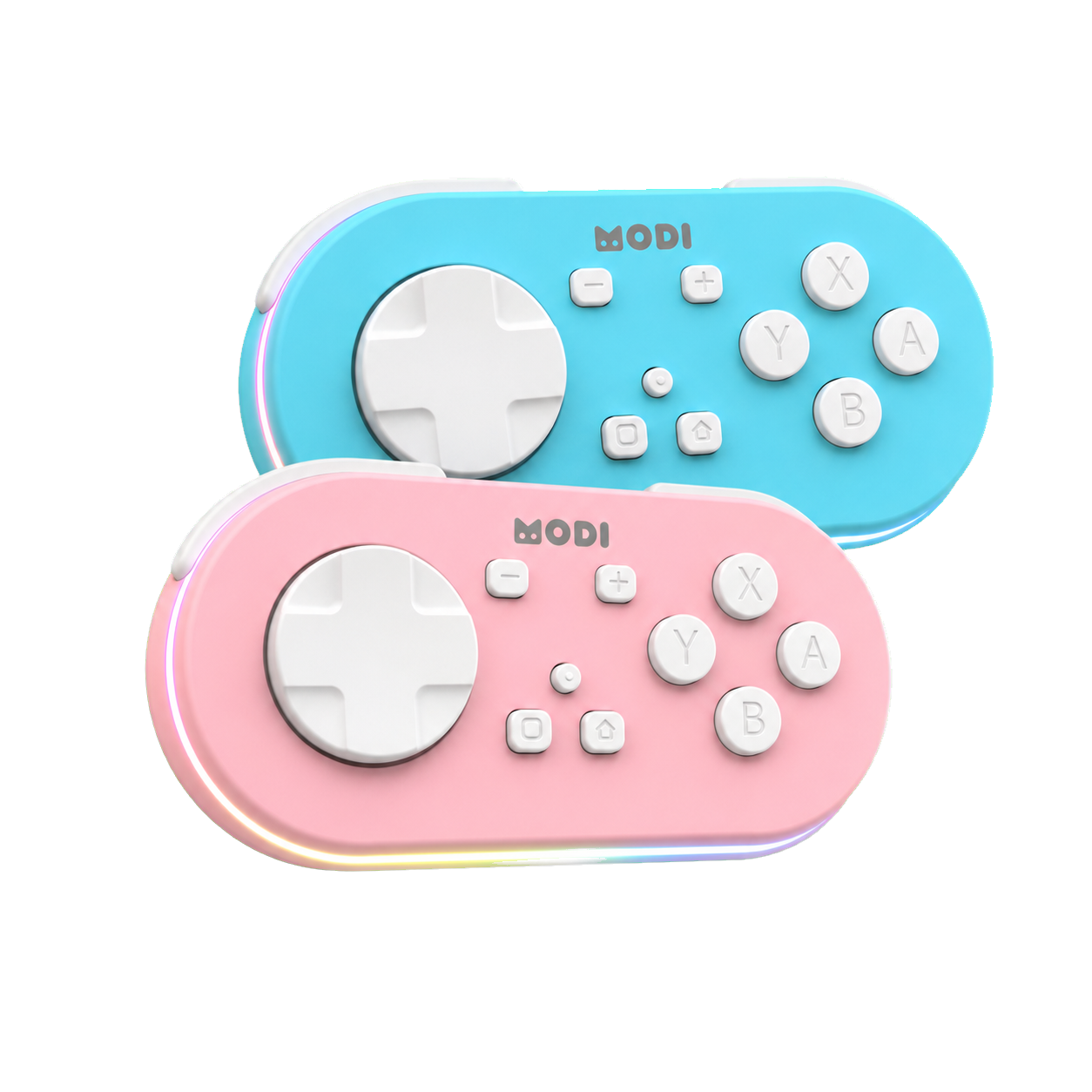
For longer Anki review sessions, set up the remote around four practical choices: start with enough charge, keep decorative lights off unless you need them, map only the review actions you actually use, and decide where breaks will happen before you begin. MODI can reduce reaching for a keyboard or screen, but the session still depends on Anki, your device, Bluetooth state, and the action mappings inside the app.
For longer Anki review sessions, set up the remote around four practical choices: start with enough charge, keep decorative lights off unless you need them, map only the review actions you actually use, and decide where breaks will happen before you begin. MODI can reduce reaching for a keyboard or screen, but the session still depends on Anki, your device, Bluetooth state, and the action mappings inside the app.
MODI is an independent Bluetooth accessory for supported desktop and mobile Anki workflows; it is not made, endorsed, or certified by Anki, AnkiMobile, AnkiDroid, Apple, Google, Microsoft, or other app or device makers. For a full pairing walkthrough, use complete MODI setup tutorial. This article focuses on session preparation rather than every setup path, so it separates documented MODI behavior from the settings controlled by desktop Anki, AnkiMobile, and AnkiDroid.
Charge
Before a long review block, charge the remote instead of guessing from habit. MODI uses a 3.7 V, 330 mAh battery, and the manual describes approximately 15 hours of continuous use under its stated conditions. Treat that as a planning reference, not a guaranteed duration. Battery life can vary with lighting choices, connection state, and how the remote is used, so the simplest preparation is to charge it before the session starts.
Use the documented light signals only for what they actually mean. A quickly flashing red LED indicates low battery. During charging, the LED flashes green, and when charging is complete, the charging LED turns off. Do not infer a precise battery percentage from an undefined pattern. If the remote sleeps during a pause, press Home to wake and reconnect in the last-used mode before assuming the battery or app mapping has failed.
Lighting
For longer sessions, turn decorative lighting off unless it serves a specific purpose. MODI allows decorative lighting to be toggled with a double-click of the Light button, and maximum practical battery life depends on keeping those LEDs off when they are not needed. Lighting modes can be useful for visibility or preference, but they are separate from the core review inputs, so leaving them off is the cleaner default for extended study blocks.
If you do use lighting, keep the choice simple before the session begins. MODI supports options such as monochrome, color breathing, automatic seven-color breathing, single color, top-to-bottom flow, and double-tail automatic cycle through Light-button combinations. Changing these during review can become another interruption, so pick one setting or turn lights off entirely. The goal is not to optimize a visual effect; it is to avoid spending session attention on the remote.
Core Actions
A long Anki session is easier to manage when the remote has a small, predictable action set. In Keyboard Mode, MODI includes preset inputs for Again, Hard, Good or Next, Easy, Undo, Suspend, Escape, Spacebar, and direction-key navigation. Desktop Anki also supports common keyboard controls such as Space or Enter to reveal an answer or choose Good, and number keys 1 through 4 for answer buttons when available.
For most sessions, start with the actions you reach for repeatedly: reveal or Good, Again, Hard, Easy, Undo, and replay audio if it is part of your deck workflow. Add Suspend or Escape only if you use them deliberately. Too many mappings can create hesitation because every button becomes a decision point. The remote should support the review rhythm you already trust rather than turn a review block into a controller configuration exercise.
Mode Choice
Choose the connection mode based on the device and mapping needs before the session. Keyboard Mode is intended for macOS, Windows, and Linux desktop use with preset keybindings, and the default Keyboard Mode workflow does not require an Anki add-on. Switch Mode is used when a desktop user wants custom remapping through the optional MODI add-on, and it is the recommended standard setup for AnkiMobile on iPhone or iPad and AnkiDroid on Android.
On mobile, remember that AnkiMobile and AnkiDroid control their own action lists. In AnkiMobile, Switch Mode works with Settings, Review, Gamepads, where desired actions can be assigned when iOS recognizes the controller profile. In AnkiDroid, use Settings, Controls, Set Key Binds. The X-Y-B-A inputs may appear as Y-X-A-B because of a third-party display mapping issue, but assigned commands can still function normally despite that label mismatch.
Hand Position
Set the remote orientation before you start reviewing, not after the first awkward stretch. The recommended MODI orientation is vertical with the D-pad facing down. That position keeps the main controls in a predictable layout and can make one-handed operation a practical workflow choice. Describe the benefit in ordinary terms: fewer reaches for the keyboard, mouse, or screen during review, not a medical or ergonomic treatment claim.
Try the first few cards slowly and confirm that your thumb naturally finds the essential actions without looking down. If a button feels easy to hit by accident, move that command to a less central control where the app allows it, or remove the mapping for that session. A long review block tends to magnify small annoyances, so the better setup is the one that stays boring and predictable after the novelty wears off.
Break Plan
Plan breaks as part of the setup rather than treating them as a failure of focus. MODI automatically sleeps after approximately 2.5 minutes without a Bluetooth connection or 5 minutes of inactivity, and you can manually sleep or turn off the remote by holding Home for 3 seconds. That behavior is useful to know before a planned pause, because waking the remote afterward may simply require pressing Home again.
If the remote reconnects after a break but does not control Anki, check the likely layers in order: active app window, current deck screen, Bluetooth connection, and the app’s assigned actions. When changing modes or moving to another device, forget saved MODI or Anki remote entries in Bluetooth settings and repeat pairing for the desired mode. If a fresh pairing connects but remains unresponsive, restart the host device and try again.
Sources and product references
This first-party MODI guide was checked against the current product manual and relevant app documentation. App menus and third-party behavior can change after publication.