
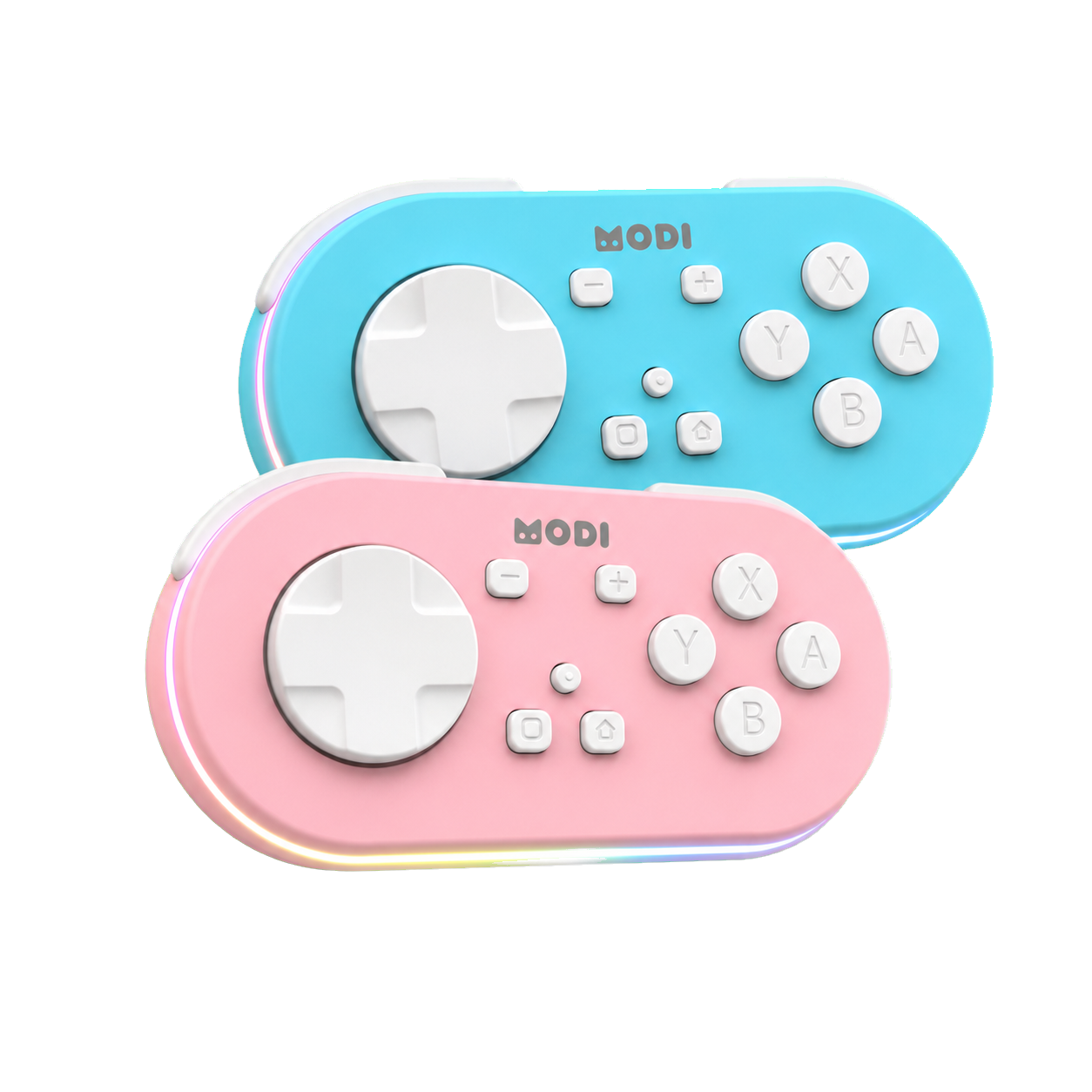
To reduce keyboard reaching during Anki review, move the repeatable review actions to a remote and keep the keyboard or touch screen for editing, searching, browsing decks, and settings. MODI is a Bluetooth accessory for supported desktop and mobile review workflows, so its practical role is control placement: reveal a card, choose an answer, undo a mistake, replay audio, or navigate without keeping your hand on the computer keyboard.
To reduce keyboard reaching during Anki review, move the repeatable review actions to a remote and keep the keyboard or touch screen for editing, searching, browsing decks, and settings. MODI is a Bluetooth accessory for supported desktop and mobile review workflows, so its practical role is control placement: reveal a card, choose an answer, undo a mistake, replay audio, or navigate without keeping your hand on the computer keyboard.
That distinction matters because MODI is independent from Anki, AnkiMobile, AnkiDroid, and device makers. The remote sends keyboard-style or gamepad-style inputs, while the app decides what those inputs do. For setup specifics, use complete MODI setup tutorial. For the daily review question, the useful test is simpler: which actions do you repeat every few cards, and which actions still require the full app interface?
Reveal
The first action worth moving is reveal. Desktop Anki supports Space or Enter to show the answer, and Keyboard Mode includes preset inputs that can handle Spacebar-style review flow. On mobile, Switch Mode is the standard MODI setup because AnkiMobile and AnkiDroid expose configurable control lists. Once mapped, reveal becomes a thumb action instead of a keyboard reach, which is useful when the device sits closer than the laptop keyboard.
Keep reveal separate from card editing in your workflow. Revealing an answer is a simple review command, but changing card text, fixing formatting, adding tags, or checking browser results belongs to Anki’s editor and navigation surfaces. A remote can reduce repeated reaches during the review screen, yet it should not be treated as a replacement for the keyboard when the task becomes content management rather than answering cards.
Answers
Answer buttons are the next obvious candidates. Keyboard Mode includes preset inputs for Again, Hard, Good or Next, and Easy, matching the common review decisions most users make repeatedly. Desktop Anki also supports number keys for answer buttons when those buttons are available. On mobile, assign equivalent actions inside AnkiMobile gamepad settings or AnkiDroid key binds, depending on the app and device you use.
This is where placement becomes practical. Put the remote where your reviewing hand naturally rests, then keep the screen, keyboard, or tablet within reach for occasional work. The goal is not to turn every Anki function into a remote button. It is to move the small set of high-frequency review decisions away from a keyboard position that may be inconvenient for your desk, chair, tablet stand, or phone setup.
Undo
Undo is useful because review sessions include accidental presses. MODI’s documented desktop Keyboard Mode actions include Undo, and Switch Mode defaults also include Undo. That makes it reasonable to keep Undo on the remote when you are configuring a compact review layout. It is especially helpful when the answer buttons are also on the remote, because the correction control stays in the same hand position as the original choice.
Do not rely on Undo as a substitute for careful review settings. Anki, AnkiMobile, and AnkiDroid each govern their own available actions and behavior, so confirm the command inside the app you are actually using. If Undo does not respond after pairing, check the mode, saved Bluetooth entries, app mapping, and host device state before assuming the remote itself is the only possible cause.
Replay
Replay Audio is another action that can reduce reaching when a deck uses sound. Switch Mode defaults include Replay Audio, and desktop workflows can also be configured through supported inputs or the optional MODI desktop add-on when custom remapping is needed. The value is straightforward: when audio cards require repeated listening, a remote button can keep replay near the same hand position as reveal and answer choices.
Replay is still limited by the app and the card. If there is no replayable audio on the current card, the command cannot create one. If the app does not currently map that input to replay, the button may do something else or nothing useful. Treat MODI as an input device within the review environment, then verify the action in the specific Anki platform before building a habit around it.
Editing
Editing is the clearest limitation. A remote can trigger documented review actions, but it is not a text-entry tool for writing notes, correcting cloze deletions, changing templates, editing fields, managing media, or searching the browser. Those jobs still need a keyboard, touch screen, mouse, trackpad, or the app’s normal controls. Planning for that boundary prevents a frustrating setup where every interruption feels like a failure.
A practical review station leaves editing tools accessible without making them the default hand position. For example, the remote can sit near your resting hand while the keyboard remains available for occasional corrections. When you notice frequent edits during review, consider whether the deck needs a separate cleanup pass. MODI can help keep routine answering on remote buttons, but it should not hide the difference between review flow and card maintenance.
Placement
For MODI itself, the recommended orientation is vertical with the D-pad facing down. Start there before changing anything else, because the button layout becomes easier to learn when it stays consistent across sessions. Place it on the side you plan to use for reveal, answer choices, Undo, and Replay. If you switch between desk, couch, phone, and tablet setups, keep the same orientation whenever possible.
Battery and lights also affect placement decisions. The remote sleeps automatically after a period without connection or inactivity, and you can hold Home for three seconds to sleep or turn it off manually. Decorative lighting can be turned off with a double-click of the Light button, which matters because maximum practical battery life depends on keeping those LEDs off when they are not needed. A stable, simple setup is usually easier to maintain.
Sources and product references
This first-party MODI guide was checked against the current product manual and relevant app documentation. App menus and third-party behavior can change after publication.