
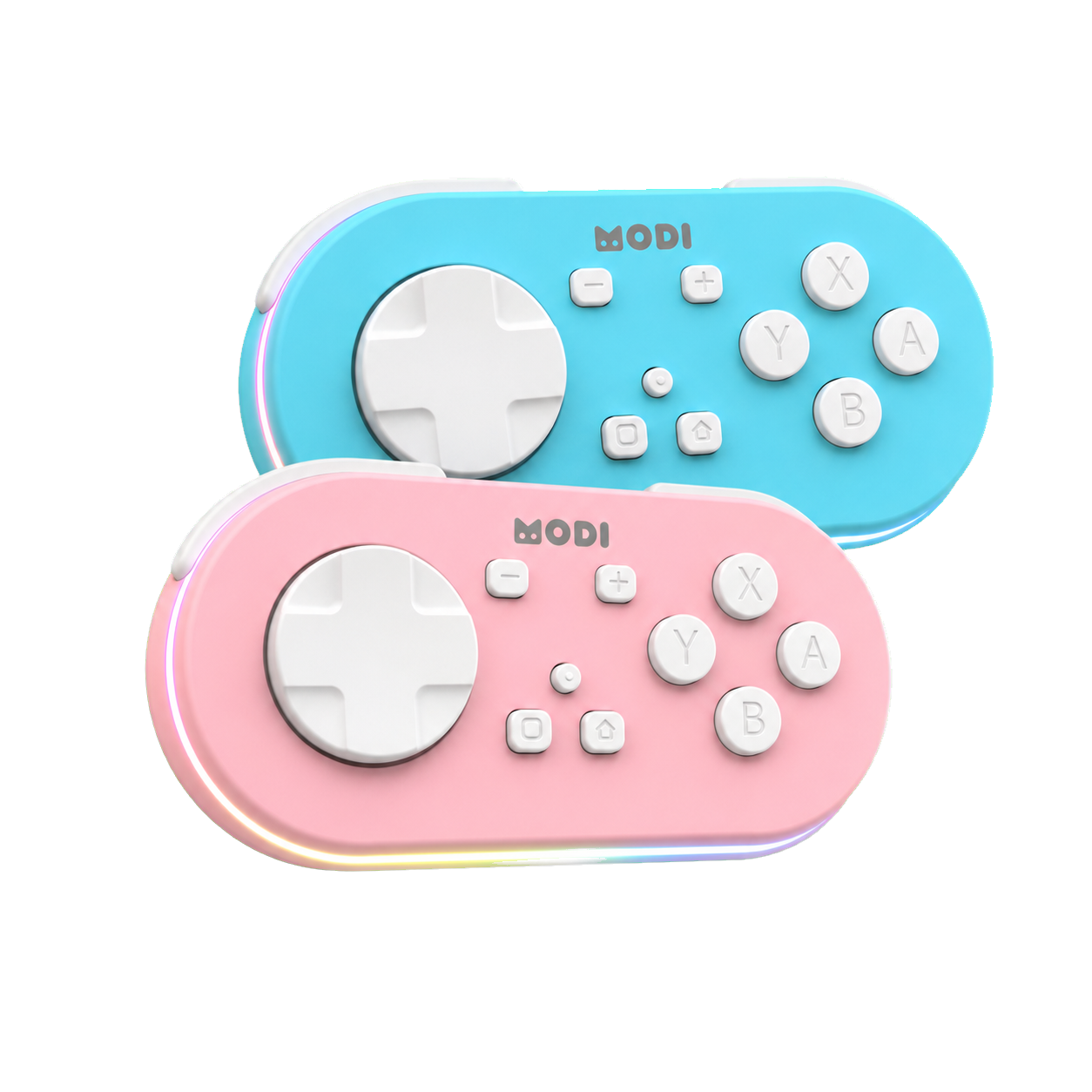
A custom Anki remote review workflow starts by deciding which review actions you use most, then placing those actions on buttons you can reach without looking down. With MODI, that usually means combining Anki’s own review controls with either Keyboard Mode presets or Switch Mode mappings through the optional desktop add-on. The goal is not to make every possible command remote-controlled; it is to make your repeated review decisions predictable, reachable, and easy to verify in a short test session.
A custom Anki remote review workflow starts by deciding which review actions you use most, then placing those actions on buttons you can reach without looking down. With MODI, that usually means combining Anki’s own review controls with either Keyboard Mode presets or Switch Mode mappings through the optional desktop add-on. The goal is not to make every possible command remote-controlled; it is to make your repeated review decisions predictable, reachable, and easy to verify in a short test session.
MODI is an independent Bluetooth accessory, not an official Anki, AnkiMobile, or AnkiDroid product. The remote sends keyboard-style or gamepad-style inputs, while Anki and its mobile apps decide what those inputs do. If you are still choosing a connection mode or pairing the device for the first time, start with the complete MODI setup tutorial before refining a custom layout. Once the remote connects, the workflow work is mostly about action selection, button priority, mapping, and validation.
Inventory
Before assigning buttons, make a simple inventory of the actions you actually use during reviews. Most people need reveal answer or choose Good, plus the answer buttons they select regularly. Desktop Anki also supports common keyboard controls such as Space or Enter to reveal an answer or choose Good, and 1 through 4 for answer buttons when those buttons are available. Add Undo, Replay Audio, Suspend, Escape, or directional navigation only if they are part of your real routine.
Keep the inventory practical rather than exhaustive. A remote layout becomes harder to trust when every button has a rarely used command and you have to remember it under review pressure. Separate essential actions from occasional maintenance actions. Essential actions deserve the easiest buttons; occasional actions can live on less prominent inputs or remain on the keyboard, touchscreen, or app menu. This first pass prevents the common mistake of configuring the remote around possibilities instead of your actual review pattern.
Priorities
After the inventory, rank actions by frequency and consequence. The most frequent commands should be assigned to buttons that are easiest to find by touch. For many Anki workflows, reveal answer, Good or Next, Again, Hard, and Easy are the core set. Undo may deserve a reachable spot because it changes a mistaken input, even if it is not used every card. Suspend or Escape can be useful, but they should not displace the review choices you make constantly.
Think about error cost as well as frequency. Accidentally choosing Easy instead of Again can matter more than accidentally opening a navigation action, so avoid placing high-consequence commands where your thumb naturally rests unless that is intentional. The recommended MODI orientation is vertical with the D-pad facing down, which gives you a consistent physical reference. Treat that orientation as a layout convention: choose one hand position, keep it stable, and map the most important actions around that position.
Mode Choice
Choose the mode based on where the custom mapping will happen. Keyboard Mode is intended for macOS, Windows, and Linux desktop use with preset keybindings, and it does not require an Anki add-on for the default workflow. If those presets already match your desired review actions, keep the setup simple. You can still build a deliberate workflow by deciding which preset buttons you will use and ignoring commands that do not belong in your regular review session.
Use Switch Mode when you want custom remapping through the MODI desktop add-on, or when setting up the standard mobile workflow for AnkiMobile or AnkiDroid. Switch Mode exposes gamepad-style inputs that those apps can map through their own settings. That distinction matters: MODI provides the input, while the app or add-on assigns the action. If a button does not behave as expected, check the active mode and the app mapping before assuming the remote itself has failed.
Mapping
On desktop, the optional MODI add-on is the route for custom Switch Mode button assignments. Install it through Anki’s add-on flow with code 406900239, restart Anki, then open the MODI Anki Remote menu to configure buttons. Add-ons extend desktop Anki and may need updates after Anki changes, so keep Keyboard Mode available as the simpler baseline. For custom layouts, record each button assignment in plain language before testing, especially if several buttons have similar review meanings.
On iPhone and iPad, AnkiMobile handles gamepad assignments in Settings, Review, Gamepads when iOS recognizes the controller profile. On Android, AnkiDroid handles assignments through Settings, Controls, Set Key Binds. In AnkiDroid, X-Y-B-A inputs can appear as Y-X-A-B because of a third-party display mapping issue; that is a visual label mismatch, not proof that assignments cannot work. Press each button during configuration and map by observed input rather than relying only on printed labels.
Validation
Validate the layout in a short review session before trusting it for a full deck. Use cards where mistakes are easy to notice, then press each mapped button deliberately. Confirm that reveal, answer choices, Undo, Replay Audio, Suspend, or navigation commands do exactly what your written map says. The session should be long enough to cover every assigned action at least once, but short enough that you can stop and correct the layout without losing track of what went wrong.
During validation, watch for three different failure types. A connection problem means the device may not be paired or awake in the expected mode. A mapping problem means the input is received but assigned to the wrong app action. A workflow problem means the mapping technically works, but the button is awkward or easy to confuse. Only the second and third categories are solved by remapping. If the remote connects but remains unresponsive after fresh pairing, restart the host device and try again.
Refinement
After the first validation pass, change as little as possible. Move only the buttons that caused mistakes or hesitation, then run another short session. This protects the parts of the layout that already worked and makes the next problem easier to identify. If you switch between desktop and mobile, keep separate notes for Keyboard Mode presets, desktop add-on mappings, and mobile gamepad assignments. The same physical button can have different behavior depending on mode and app configuration.
When changing modes or moving MODI to another phone, tablet, or computer, start by forgetting every saved MODI or Anki remote entry in Bluetooth settings and then pair again in the desired mode. Press Home to wake and reconnect in the last-used mode when you are returning to the same setup. Once the layout survives a short validation session, keep it stable for a while; consistency is what makes a custom Anki remote workflow usable day after day.
Sources and product references
This first-party MODI guide was checked against the current product manual and relevant app documentation. App menus and third-party behavior can change after publication.