
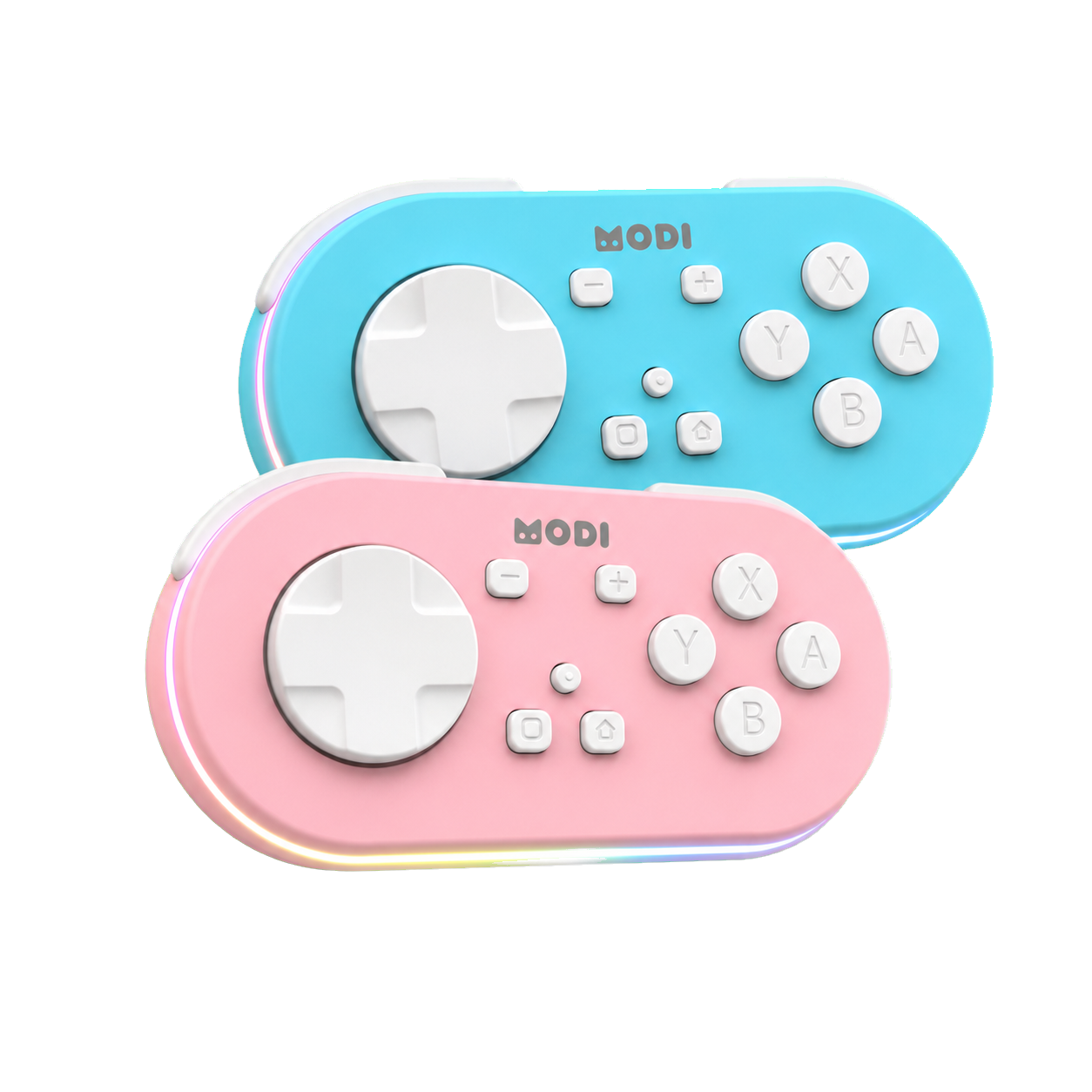
To map Undo, Suspend, and Replay Audio to an Anki remote, first keep the core answer buttons easy to reach, then assign secondary actions to less central buttons through the app or MODI desktop add-on. MODI is an independent Bluetooth accessory for Anki workflows, not an official Anki product. On desktop, Keyboard Mode already includes several preset review inputs, while Switch Mode with the optional add-on gives more control over custom button assignments.
To map Undo, Suspend, and Replay Audio to an Anki remote, first keep the core answer buttons easy to reach, then assign secondary actions to less central buttons through the app or MODI desktop add-on. MODI is an independent Bluetooth accessory for Anki workflows, not an official Anki product. On desktop, Keyboard Mode already includes several preset review inputs, while Switch Mode with the optional add-on gives more control over custom button assignments.
A practical layout starts with Good or Space, Again, Hard, and Easy, then adds Undo, Suspend, and Replay Audio only where they will not interrupt normal answering. The exact mapping path depends on whether you are using desktop Anki, AnkiMobile, or AnkiDroid. For full pairing and mode steps before remapping, use the complete MODI setup tutorial, then return to the mapping priorities below. Treat app settings and MODI settings as separate layers that must both match your intended workflow.
Prioritize
Answer controls should get the easiest buttons because they are used repeatedly during review. Desktop Anki supports common keyboard controls such as Space or Enter to reveal an answer or choose Good, and number keys 1 through 4 for answer buttons when available. MODI Keyboard Mode includes preset inputs for Again, Hard, Good or Next, Easy, Undo, Suspend, Escape, Spacebar, and direction-key navigation, so many desktop users can start without installing the add-on.
Secondary actions are useful, but they should not displace the buttons you depend on for every card. Undo is most valuable when a mistaken answer happens and you want a quick correction path. Suspend is more deliberate because it removes a card from regular review. Replay Audio is helpful for audio cards, but it is not needed on every deck. Put these actions where accidental presses are less likely, especially if you hold the remote one-handed.
Undo
Undo deserves a reachable but protected button. It is useful after selecting the wrong answer, revealing too soon, or triggering an action you did not intend. In MODI Keyboard Mode, Undo is already among the preset review inputs for desktop use. If that preset matches your Anki workflow, there is no need to install the MODI add-on only to recreate the same basic function.
If you do customize, map Undo after your answer buttons are stable. On desktop, the optional MODI add-on can be installed in Anki with code 406900239, followed by an Anki restart and configuration from the MODI Anki Remote menu. Because add-ons extend desktop Anki and may need updates after Anki changes, use them when you need remapping, not as a requirement for the default Keyboard Mode workflow.
Suspend
Suspend should be treated as a deliberate card-management command, not a frequent answer choice. It is useful when a card should leave normal review because it is flawed, misplaced, or no longer appropriate for the current deck. Since suspension changes the card’s review availability, avoid placing it on a button that your thumb naturally hits while choosing Again, Hard, Good, or Easy.
A good Suspend placement is usually off the main answer cluster. MODI Keyboard Mode includes a preset Suspend input on desktop, but custom desktop users can move it through the MODI add-on if their hand position makes accidental presses plausible. On mobile, use the action list supplied by AnkiMobile or AnkiDroid rather than assuming a desktop shortcut exists. The app is responsible for which commands can be assigned to recognized controller inputs.
Replay
Replay Audio matters most for decks with pronunciation, listening practice, sentence audio, or other media where hearing the prompt again is part of the review decision. In Switch Mode, MODI defaults include Replay Audio along with Space or Good, Easy, Again, Hard, and Undo. That makes Switch Mode a useful starting point when the reviewing app recognizes the remote as gamepad-style input.
Do not sacrifice an answer button for Replay Audio unless audio replay is central to the deck. For mixed decks, assign Replay Audio to a shoulder or secondary face button, then keep the main answer choices consistent. In AnkiMobile, use Settings, Review, and Gamepads to assign available actions when iOS recognizes the controller profile. In AnkiDroid, use Settings, Controls, and Set Key Binds for the equivalent app-side configuration.
Mobile
For iPhone, iPad, and Android, the standard MODI mobile setup uses Switch Mode. Connect by using the device’s Bluetooth settings and pairing in that mode before changing app controls. AnkiMobile and AnkiDroid then provide their own configurable action lists, so the final mapping is an app behavior rather than a promise made by the remote alone. Keep that distinction in mind when troubleshooting a button that pairs but performs the wrong command.
On AnkiDroid, X-Y-B-A inputs can appear as Y-X-A-B in the key-bind menu because of a third-party display mapping issue. That is a visual label mismatch; assigned commands can still work normally. When mapping Undo, Suspend, or Replay Audio, test each button on a harmless card before relying on the label alone. If the remote pairs but remains unresponsive after a fresh pairing, restart the phone or tablet and try again.
Troubleshoot
When a mapping feels wrong, separate connection mode, saved pairing state, and app configuration. Keyboard Mode is intended for desktop use with preset keybindings, while Switch Mode exposes gamepad-style inputs for custom desktop remapping and mobile setup. If you change from one mode to another, forget every saved MODI or Anki remote entry in Bluetooth settings, then repeat the full connection steps for the intended mode before judging the mapping.
Also check whether the remote is awake, charged, and connected in the mode you expect. Press Home to wake and reconnect in the last-used mode. The center LED is solid green after a Keyboard Mode connection and solid blue after a Switch Mode connection. Low battery is shown by a quickly flashing red LED. Decorative lighting can be turned off with a Light button double-click, which helps preserve practical battery life during longer review sessions.
Sources and product references
This first-party MODI guide was checked against the current product manual and relevant app documentation. App menus and third-party behavior can change after publication.