
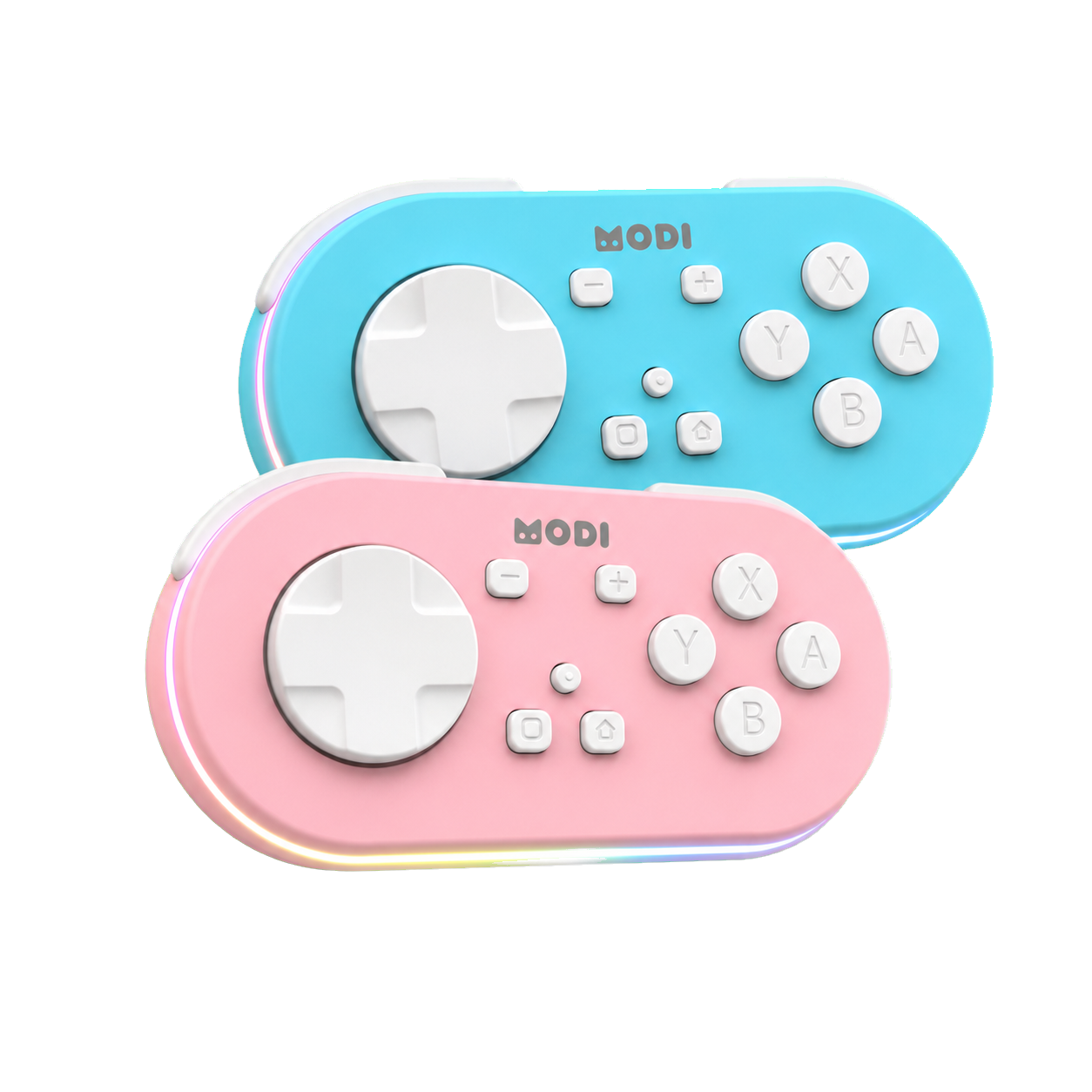
To pair an Anki remote with Android, start in Android Bluetooth settings, put MODI in Switch Mode, then choose the MODI entry when it appears. For MODI, Switch Mode is the standard Android path because AnkiDroid can work with gamepad-style inputs after pairing. MODI is an independent Bluetooth accessory, not an AnkiDroid or Anki product, so Android handles the Bluetooth connection while AnkiDroid handles the review controls you assign afterward.
To pair an Anki remote with Android, start in Android Bluetooth settings, put MODI in Switch Mode, then choose the MODI entry when it appears. For MODI, Switch Mode is the standard Android path because AnkiDroid can work with gamepad-style inputs after pairing. MODI is an independent Bluetooth accessory, not an AnkiDroid or Anki product, so Android handles the Bluetooth connection while AnkiDroid handles the review controls you assign afterward.
Android menus vary by phone maker and Android version, so the exact labels may say Bluetooth, Connected devices, Pair new device, or something similar. The sequence is still the same: open the system pairing screen, wake the remote in the right mode, select the remote, then confirm the connection state. For the broader setup path after pairing, use the complete MODI setup tutorial and return here if your Android Bluetooth menu names differ.
Android Menu Variation
On many Android phones, Bluetooth pairing starts in Settings under Connected devices. Other devices place the same control under Connections, Bluetooth, or a quick settings tile that opens a paired-devices screen. Do not worry if your menu names do not match a guide word for word. What matters is reaching the screen where Android scans for nearby Bluetooth accessories and lets you select a new device that is not already saved.
If Android shows separate areas for available devices and previously connected devices, check both before assuming the remote is not visible. A saved MODI entry can sometimes remain listed even after the remote has been moved between devices or modes. Android manufacturers also use different icons and wording for forgetting a device. Look for a gear, details page, paired-device menu, or remove option when cleanup is needed before pairing again.
Use Switch Mode
For Android, use MODI Switch Mode rather than Keyboard Mode. Hold Y + Home for one second while Android is scanning for new Bluetooth devices. After the connection succeeds, the center LED becomes solid blue. That blue LED is documented MODI behavior, and it confirms the remote connected in Switch Mode. It does not, by itself, prove that AnkiDroid has assigned every button to the review actions you want.
Switch Mode matters because the standard mobile setup exposes gamepad-style inputs for AnkiDroid. Keyboard Mode is mainly intended for desktop Anki workflows with preset keyboard inputs, and it is not the Android path described here. Once Android has paired the remote in Switch Mode, AnkiDroid can be configured separately through its own controls menu. Keep those two steps mentally separate: Bluetooth pairing first, app key binds second.
Clean Saved Entries
Before repairing, remove old MODI or Anki remote entries from Android Bluetooth settings. This is especially important when changing from Keyboard Mode to Switch Mode, moving the remote from another phone or tablet, or retrying after a partial connection. A stale saved entry can make Android reconnect using the wrong remembered profile, or show the remote as connected while the app still does not respond as expected.
Open the saved Bluetooth entry and choose Forget, Unpair, or Remove, depending on your Android version. If there are several similar MODI or Anki remote entries, remove every one before starting again. Then return to the main Bluetooth pairing screen and repeat the full Switch Mode sequence. This cleanup step is a practical first diagnostic because it resets Android’s memory of the accessory without changing your AnkiDroid collection or study settings.
Pair The Remote
With old entries removed, keep Android on the screen that searches for new Bluetooth devices. Hold Y + Home on MODI for one second. Wait for the remote to appear, select it, and accept any Android confirmation prompt if one appears. If the device list refreshes slowly, give Android a moment before pressing buttons again. Repeated mode presses are usually less useful than letting the scan complete cleanly.
After Android reports that the device is connected, check MODI’s center LED. A solid blue light indicates a successful Switch Mode connection. If the LED is not solid blue, or Android lists the remote but does not actually connect, forget the entry and repeat the pairing process. If the remote has been idle, press Home to wake it, because MODI reconnects in the last-used mode when woken that way.
Configure AnkiDroid
Bluetooth pairing only connects the remote to Android. To use it during reviews, open AnkiDroid and go to Settings, then Controls, then Set Key Binds. Assign the actions you want from AnkiDroid’s available controls. This part is AnkiDroid app behavior, not a MODI Bluetooth setting. MODI sends inputs in its current mode, while AnkiDroid decides what those inputs should do inside the review screen.
When assigning buttons, be aware of a documented Android-side display issue in AnkiDroid’s menu: X-Y-B-A inputs can appear visually as Y-X-A-B. Treat that as a label mismatch in the setup screen, not proof that the remote is broken. Assign a command, test it in review, and adjust the binding based on what the button actually does. The functional command can still work normally even if the displayed label looks swapped.
Check Problems
If Android says the remote is connected but AnkiDroid does not respond, start by separating the likely layers. Confirm the center LED is solid blue for Switch Mode, then confirm AnkiDroid has key binds assigned. If either condition is missing, fix that layer first. If both look correct after a fresh pairing, restart the Android device and try again, because host-device Bluetooth state can affect input behavior.
Battery state can also matter during troubleshooting, but do not infer a percentage from undocumented LED behavior. MODI’s low-battery signal is a quickly flashing red LED. Charging uses a flashing green LED, and the charging LED turns off when charging is complete. If the remote sleeps, press Home to wake it. For manual sleep or shutdown, hold Home for three seconds, then reconnect from the intended Android pairing state.
Sources and product references
This first-party MODI guide was checked against the current product manual and relevant app documentation. App menus and third-party behavior can change after publication.