
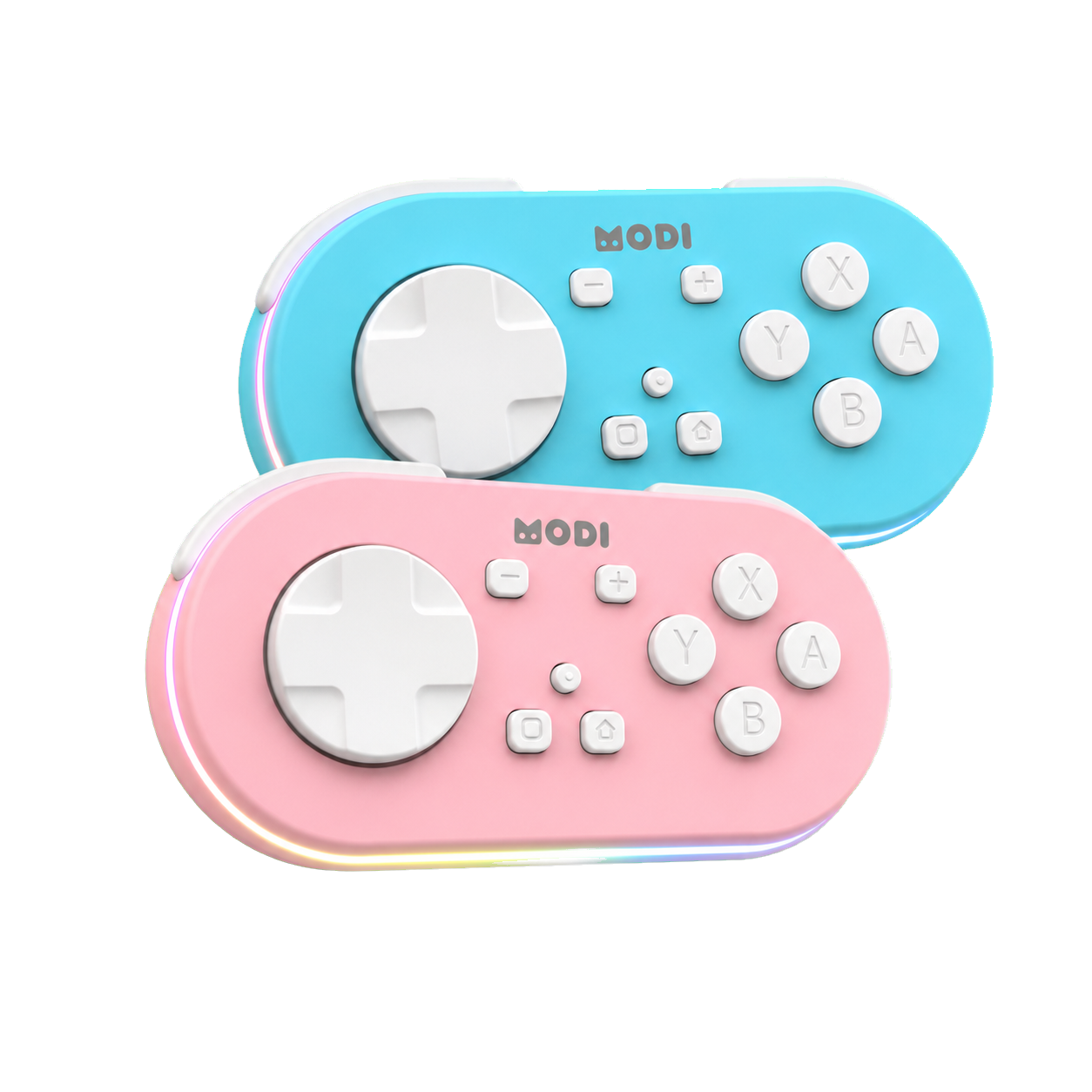
If your Anki remote buttons are doing the wrong actions, start by checking three things: the connection mode, old Bluetooth pairings, and the action map inside the app you are using. A MODI Anki remote can send different kinds of inputs depending on its mode, while Anki, AnkiMobile, and AnkiDroid each decide what those inputs mean. Wrong actions usually come from that handoff, not from a single setting with one universal fix.
If your Anki remote buttons are doing the wrong actions, start by checking three things: the connection mode, old Bluetooth pairings, and the action map inside the app you are using. A MODI Anki remote can send different kinds of inputs depending on its mode, while Anki, AnkiMobile, and AnkiDroid each decide what those inputs mean. Wrong actions usually come from that handoff, not from a single setting with one universal fix.
MODI is an independent Bluetooth accessory, not a product made or certified by Anki, AnkiMobile, AnkiDroid, Apple, Google, Microsoft, or any flashcard app. That matters because the remote sends keyboard-style or gamepad-style input, then the host device and study app interpret it. Work through the checks below before changing multiple settings at once. For a full clean setup path, use complete MODI setup tutorial after you identify which step is actually failing.
Mode
A mode mismatch is the first thing to rule out. Keyboard Mode is intended for macOS, Windows, and Linux desktop use with preset keybindings, and the default desktop workflow does not require the MODI add-on. Switch Mode is used when a desktop user wants custom remapping through the optional add-on, and it is the standard MODI mobile setup for AnkiMobile and AnkiDroid because it exposes gamepad-style inputs those apps can map.
Check the center LED after connecting. In Keyboard Mode, a successful connection shows a solid green center LED. In Switch Mode, a successful connection shows a solid blue center LED. If the light color does not match the workflow you are trying to use, the buttons may appear to perform unexpected actions because the app is receiving a different input type than the one you configured. Treat that as a mode problem before changing individual buttons.
Pairing
Saved Bluetooth entries can preserve the wrong mode or stale controller identity. When changing from one mode to another, forget every saved MODI or Anki remote entry in the device Bluetooth settings, then repeat the full pairing process for the desired mode. The same forget-and-repair step is also the preferred starting point when moving the remote to a different phone, tablet, or computer, because the new host may read the device differently.
For Keyboard Mode, open Bluetooth settings, hold A plus Home for one second, and select the MODI connection. For Switch Mode, open Bluetooth settings, hold Y plus Home for one second, and select the MODI connection. After pairing, press Home later to wake and reconnect in the last-used mode. If the remote connects but still remains unresponsive after a fresh pairing, restart the host device and test again before assuming the button map is corrupted.
Mappings
After mode and pairing are clean, review the app mapping. On desktop Anki, Keyboard Mode uses preset inputs for actions such as Again, Hard, Good or Next, Easy, Undo, Suspend, Escape, Spacebar, and direction-key navigation. Desktop Anki also has its own keyboard controls, including Space or Enter to reveal an answer or choose Good, plus 1 through 4 for answer buttons when those choices are available. Those app behaviors are separate from the remote hardware.
If you use the optional desktop MODI add-on, confirm the add-on mapping rather than judging by the printed button labels. The add-on code is 406900239, and after installation it is configured from the MODI Anki Remote menu in desktop Anki. Add-ons extend desktop Anki and may need updates after Anki itself changes. They are not required for the default Keyboard Mode workflow, so only troubleshoot the add-on path if you deliberately chose custom remapping.
Labels
Printed labels are helpful for orientation, but they are not the final authority for what an app will do. A button marked with one letter may send an input that AnkiMobile, AnkiDroid, desktop Anki, or the MODI add-on maps to a different review command. This is especially important if you recently copied a keybind layout from another device, switched between mobile and desktop, or changed from Keyboard Mode to Switch Mode without clearing saved Bluetooth entries first.
The recommended MODI orientation is vertical with the D-pad facing down, so check that you are holding the remote the same way you held it when you assigned commands. If the remote is rotated, a direction input can feel like the wrong action even when the mapping is technically correct. For review workflows, treat labels, orientation, mode, and app assignment as one chain. A mismatch at any point can make a correct signal look wrong.
Test
Use a one-button test so you are not diagnosing several inputs at once. Pick one simple action, such as revealing an answer or choosing Good, then assign or verify only that action in the relevant app. Press the expected button once and watch what the app does. If the action works, leave that button alone and test the next one. If it fails, record the button pressed, the visible app action, and the current mode color.
On AnkiMobile, use Switch Mode and review Settings, Review, Gamepads for the assigned actions. On AnkiDroid, use Switch Mode and review Settings, Controls, Set Key Binds. In AnkiDroid, X-Y-B-A inputs can appear as Y-X-A-B in the menu because of a third-party display mapping issue. That is a visual label mismatch; assigned commands can still function normally. The one-button test helps separate a confusing displayed label from a broken mapping.
Reset
If the behavior still looks wrong, reset the chain in a controlled order. Forget the saved Bluetooth entry, choose the intended mode, pair again, confirm the solid green or solid blue center LED, then review the app mapping before testing. Avoid changing every button at once. If the remote has slept, press Home to wake it and reconnect in the last-used mode. To manually sleep or turn it off, hold Home for three seconds.
Battery and lights can also confuse troubleshooting without changing button meanings. A quickly flashing red LED indicates low battery, while charging flashes green and the charging LED turns off when charging is complete. Decorative lighting is separate and can be turned on or off by double-clicking the Light button. Do not infer a battery percentage from an undefined LED pattern. If the device is paired, charged, in the right mode, and mapped correctly, restart the host and test again.
Sources and product references
This first-party MODI guide was checked against the current product manual and relevant app documentation. App menus and third-party behavior can change after publication.