
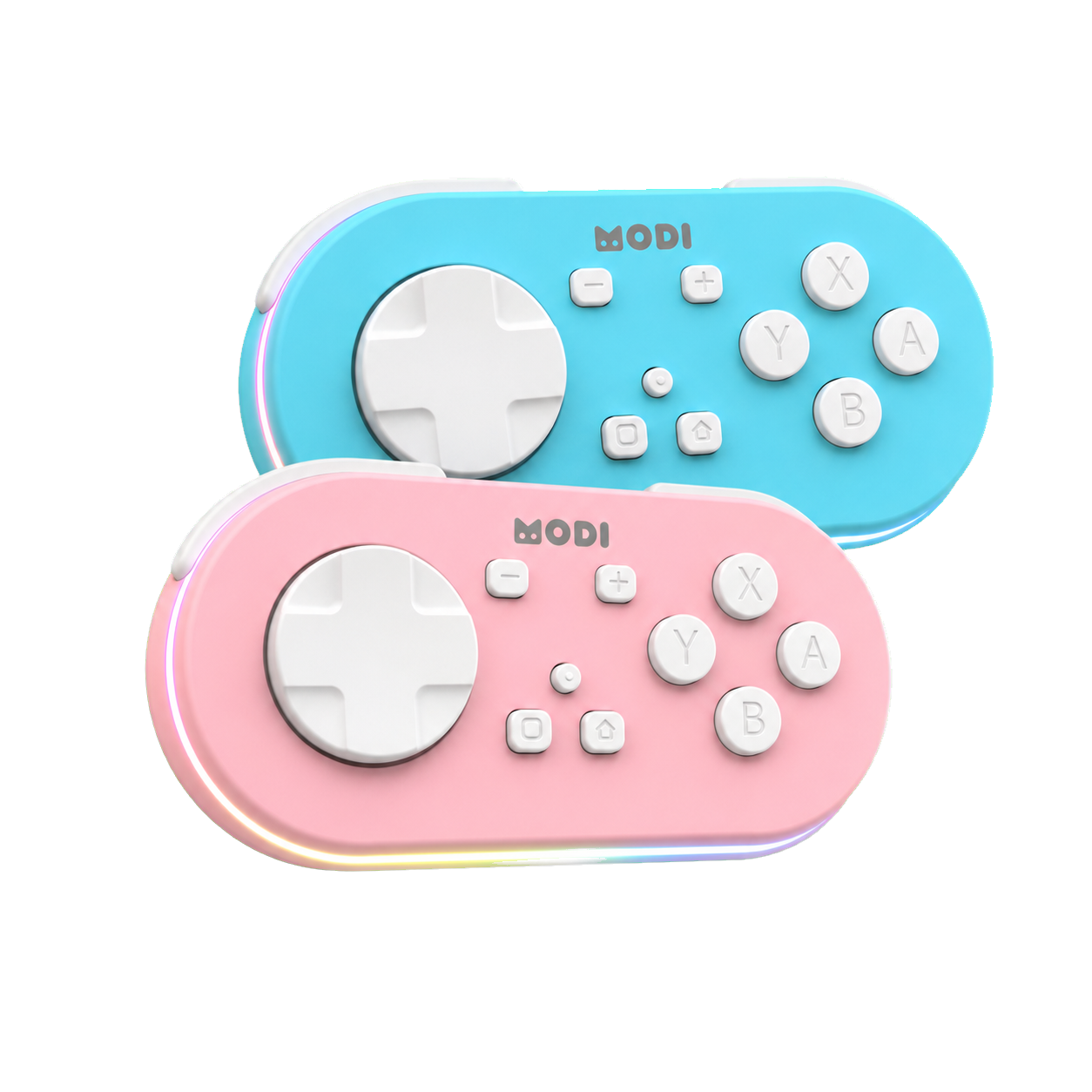
To change a MODI Anki remote from Keyboard Mode to Switch Mode, first remove every saved MODI or Anki remote entry from the device's Bluetooth settings. Then start a fresh pairing by holding Y plus Home for one second, selecting the MODI connection, and waiting for the center LED to turn solid blue. That blue light confirms a Switch Mode connection, which is the mode used for gamepad-style inputs in supported apps.
To change a MODI Anki remote from Keyboard Mode to Switch Mode, first remove every saved MODI or Anki remote entry from the device’s Bluetooth settings. Then start a fresh pairing by holding Y plus Home for one second, selecting the MODI connection, and waiting for the center LED to turn solid blue. That blue light confirms a Switch Mode connection, which is the mode used for gamepad-style inputs in supported apps.
This reset matters because Keyboard Mode and Switch Mode present different input profiles to the phone, tablet, or computer. If an old pairing remains saved, the host device may reconnect to the previous mode instead of accepting the new one. MODI is an independent Bluetooth accessory, not an official Anki, AnkiMobile, or AnkiDroid product, so the final behavior also depends on the app’s own input settings after pairing.
Unpair
Begin on the device where the remote was last used. Open Bluetooth settings and look for every saved entry that appears to represent MODI, an Anki remote, or the previous controller pairing. Forget each one rather than disconnecting temporarily. Disconnect only ends the current session; forgetting removes the saved profile that can cause the device to reconnect using the old Keyboard Mode relationship when the remote wakes again.
If you have tried the remote with more than one phone, tablet, or computer, repeat the same cleanup on any nearby device that may still remember it. Bluetooth devices can sometimes reconnect to the last familiar host when both are awake. Clearing the saved entries gives the next pairing attempt a cleaner path and is also the recommended starting point when moving MODI from one device to another.
Pair
After the old entries are removed, wake the remote and start Switch Mode pairing. Hold Y plus Home for one second. Then stay in the host device’s Bluetooth settings and select the MODI connection when it appears. Do not use the A plus Home shortcut here; that is the documented Keyboard Mode pairing command for desktop use with preset keyboard inputs.
A successful Switch Mode connection is shown by the center LED becoming solid blue. That LED color is the remote-side confirmation for this mode change. If the remote appears in Bluetooth settings but the center LED does not settle into solid blue, treat the pairing as incomplete. Forget the entry again, make sure you used Y plus Home, and repeat the connection steps from Bluetooth settings.
Confirm
Once the LED is solid blue, the remote is connected in Switch Mode, but that does not automatically assign every action inside the study app. Switch Mode exposes gamepad-style inputs that the supported app can interpret. The remote has completed its part when the Bluetooth pairing is active in the correct mode; the next step is to configure the app that will receive those inputs.
For AnkiMobile on iPhone or iPad, open AnkiMobile settings, go to Review, then Gamepads, and assign the actions you want. For AnkiDroid on Android, open Settings, then Controls, then Set Key Binds. These menus belong to the mobile apps, not to MODI itself, so the available action names and configuration screens are controlled by those applications.
Map
Choose a small set of review actions first, then test them before filling every available control. Switch Mode defaults include Space or Good, Easy, Again, Replay Audio, Hard, and Undo. The exact command you assign depends on the app menu and your review preference. MODI should be treated as the input device, while AnkiMobile or AnkiDroid decides what each recognized input does during review.
On AnkiDroid, be aware of the documented display-label issue where X-Y-B-A inputs can appear as Y-X-A-B in the key-bind menu. This is a visual mismatch in the third-party display mapping, not proof that the remote paired in the wrong mode. Assign the command, test it in review, and judge the result by the action performed rather than by the letter shown in that menu.
Troubleshoot
If the remote connects but does nothing in the app, start with the simple checks before assuming hardware failure. Confirm that the center LED is solid blue, confirm the old Bluetooth entries were forgotten, and confirm that the app has a command assigned to the input you are pressing. A Bluetooth connection alone does not guarantee that the app is configured to respond to that specific button.
If those checks do not resolve it, forget the MODI entry again, restart the phone, tablet, or computer, and pair once more with Y plus Home. Restarting the host device is the next documented diagnostic step when a fresh pairing connects but remains unresponsive. Battery state can also matter, especially if the low-battery LED is flashing red quickly, so charge the remote before repeating tests.
Reference
The same change-of-mode process applies whenever you intentionally move from Keyboard Mode to Switch Mode: forget saved remote entries, pair with Y plus Home, wait for the solid blue LED, then configure the app. Pressing Home later wakes the remote and reconnects in the last-used mode, so a clean mode change depends on removing the previous saved profile before pairing again.
Use complete MODI setup tutorial when you need the broader setup path, including desktop Keyboard Mode, Switch Mode, add-on configuration, and device-specific notes. For this task, the key point is narrower: a mode change is not just a button shortcut. It is a fresh Bluetooth pairing in the desired mode, followed by app-level mapping inside AnkiMobile, AnkiDroid, or the supported desktop workflow you choose.
Sources and product references
This first-party MODI guide was checked against the current product manual and relevant app documentation. App menus and third-party behavior can change after publication.